Blogs

Blogs

8 mins

8 mins

RFP Software Pricing in 2026: What Every Platform Actually Costs

RFP Software Pricing in 2026: What Every Platform Actually Costs

RFP Software Pricing in 2026: What Every Platform Actually Costs

RFP Software Pricing in 2026: What Every Platform Actually Costs

Harpreet Singh, MBA

Founder, Thalamus AI

With 12+ years in AI and enterprise software, including GenAI product work at Travelers, Harpreet writes about AI RFP software, AI bid tools, proposal operations, RFP response automation, and the future of enterprise bid management.

Summarize with ChatGpt

Summarize with ChatGpt

Key Takeaways

  • Most major RFP software vendors, including Thalamus AI, do not publish pricing publicly. Enterprise RFP software is custom-priced because cost genuinely depends on team size, feature tier, implementation scope, and integration requirements. No two deployments are identical.

  • RFP software pricing in 2026 spans a wide range: self-serve AI-native tools start at free to $300/month; mid-market platforms run $800-$1,300/month; and enterprise legacy platforms typically start at $15,000-$25,000+/year before implementation, seat scaling, and AI add-ons are factored in.

  • Three pricing models dominate the category: per-seat (cost scales with users), project-based (cost scales with RFP volume), and unlimited subscription (flat cost regardless of team size or volume).

  • Hidden costs like implementation fees, content migration, AI feature add-ons, and annual price increases can double or triple the base subscription cost. These are almost never mentioned on pricing pages.

  • The most important pricing decision is not the sticker price but the pricing model: it determines whether your cost grows every time you add a reviewer, an SME, or a new bid.

Summarize with ChatGPT

Key Takeaways

Key Takeaways

Key Takeaways

  • Most major RFP software vendors, including Thalamus AI, do not publish pricing publicly. Enterprise RFP software is custom-priced because cost genuinely depends on team size, feature tier, implementation scope, and integration requirements. No two deployments are identical.

  • RFP software pricing in 2026 spans a wide range: self-serve AI-native tools start at free to $300/month; mid-market platforms run $800-$1,300/month; and enterprise legacy platforms typically start at $15,000-$25,000+/year before implementation, seat scaling, and AI add-ons are factored in.

  • Three pricing models dominate the category: per-seat (cost scales with users), project-based (cost scales with RFP volume), and unlimited subscription (flat cost regardless of team size or volume).

  • Hidden costs like implementation fees, content migration, AI feature add-ons, and annual price increases can double or triple the base subscription cost. These are almost never mentioned on pricing pages.

  • The most important pricing decision is not the sticker price but the pricing model: it determines whether your cost grows every time you add a reviewer, an SME, or a new bid.

  • Most major RFP software vendors, including Thalamus AI, do not publish pricing publicly. Enterprise RFP software is custom-priced because cost genuinely depends on team size, feature tier, implementation scope, and integration requirements. No two deployments are identical.

  • RFP software pricing in 2026 spans a wide range: self-serve AI-native tools start at free to $300/month; mid-market platforms run $800-$1,300/month; and enterprise legacy platforms typically start at $15,000-$25,000+/year before implementation, seat scaling, and AI add-ons are factored in.

  • Three pricing models dominate the category: per-seat (cost scales with users), project-based (cost scales with RFP volume), and unlimited subscription (flat cost regardless of team size or volume).

  • Hidden costs like implementation fees, content migration, AI feature add-ons, and annual price increases can double or triple the base subscription cost. These are almost never mentioned on pricing pages.

  • The most important pricing decision is not the sticker price but the pricing model: it determines whether your cost grows every time you add a reviewer, an SME, or a new bid.

Quick Answer: How Much Does RFP Software Cost in 2026?

Quick Answer: How Much Does RFP Software Cost in 2026?

Quick Answer: How Much Does RFP Software Cost in 2026?

RFP software pricing in 2026 ranges from free tools and $20-$25/month general AI subscriptions to $800-$1,500/month AI-native platforms and $15,000-$100,000+/year enterprise RFP software.

The final cost depends on the pricing model, team size, RFP volume, AI features, implementation scope, integrations, and whether the platform charges per user, per project, or through an unlimited-user subscription.

The biggest mistake buyers make is comparing only the base subscription price. The real cost of RFP software includes implementation, content library setup, AI add-ons, seat scaling, support tiers, renewal increases, and the labor required to maintain proposal knowledge

RFP software pricing in 2026 ranges from free tools and $20-$25/month general AI subscriptions to $800-$1,500/month AI-native platforms and $15,000-$100,000+/year enterprise RFP software.

The final cost depends on the pricing model, team size, RFP volume, AI features, implementation scope, integrations, and whether the platform charges per user, per project, or through an unlimited-user subscription.

The biggest mistake buyers make is comparing only the base subscription price. The real cost of RFP software includes implementation, content library setup, AI add-ons, seat scaling, support tiers, renewal increases, and the labor required to maintain proposal knowledge

Why RFP Software Pricing Is Genuinely Difficult to Research in 2026?

Why RFP Software Pricing Is Genuinely Difficult to Research in 2026?

If you have spent any time comparing RFP software costs before finding this page, you already know the challenge. Most major platforms, including Thalamus AI, require a direct conversation before sharing pricing. 

Loopio: contact sales. Responsive: contact sales. Qvidian: contact sales. Thalamus AI: contact for pricing. You cannot build a budget model or get internal approval without first engaging with every vendor on your shortlist.

There is a real reason for this, and it is worth saying plainly: enterprise RFP software is genuinely difficult to price off a public rate card. The cost depends on your team size, your RFP volume, the features your workflow requires, the integrations you need, and the implementation scope. 

Two organizations with the same headcount can have very different cost profiles depending on how they use the platform. A single published price would be misleading for most buyers, either too high for smaller teams or too low for complex enterprise deployments.

That said, understanding what drives the cost and what range to expect before you get on a call makes every vendor conversation more productive. This guide pulls together what is publicly known from verified user community reports on G2, Gartner Peer Insights, Capterra, and TrustRadius, neutral platforms where buyers share real cost data, so you can walk into any pricing conversation with a clearer picture of what to ask and what to expect.

Want to understand how Thalamus AI's pricing works for your team size and RFP workflow? We will give you a clear picture before you commit to anything. Book a Free Demo

If you have spent any time comparing RFP software costs before finding this page, you already know the challenge. Most major platforms, including Thalamus AI, require a direct conversation before sharing pricing. 

Loopio: contact sales. Responsive: contact sales. Qvidian: contact sales. Thalamus AI: contact for pricing. You cannot build a budget model or get internal approval without first engaging with every vendor on your shortlist.

There is a real reason for this, and it is worth saying plainly: enterprise RFP software is genuinely difficult to price off a public rate card. The cost depends on your team size, your RFP volume, the features your workflow requires, the integrations you need, and the implementation scope. 

Two organizations with the same headcount can have very different cost profiles depending on how they use the platform. A single published price would be misleading for most buyers, either too high for smaller teams or too low for complex enterprise deployments.

That said, understanding what drives the cost and what range to expect before you get on a call makes every vendor conversation more productive. This guide pulls together what is publicly known from verified user community reports on G2, Gartner Peer Insights, Capterra, and TrustRadius, neutral platforms where buyers share real cost data, so you can walk into any pricing conversation with a clearer picture of what to ask and what to expect.

Want to understand how Thalamus AI's pricing works for your team size and RFP workflow? We will give you a clear picture before you commit to anything. Book a Free Demo

How Much Does RFP Software Cost in 2026?

How Much Does RFP Software Cost in 2026?

How Much Does RFP Software Cost in 2026?

The honest answer is: it depends on your team size, your RFP volume, the pricing model the vendor uses, and how many hidden costs you let accumulate before renewal. But the range is wide enough to be useful even before you know those specifics.

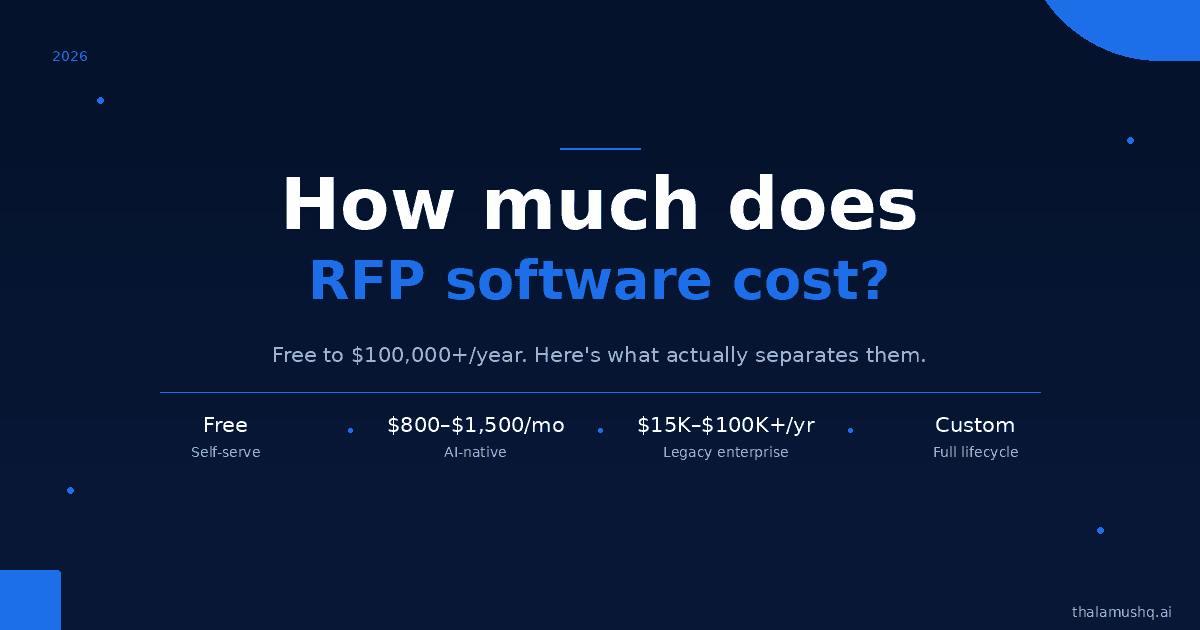
Based on industry analyst data and verified user community reports, RFP software pricing in 2026 falls broadly into four tiers:

Entry-level and self-serve RFP tools cost: Free to $300/month: 

These include general-purpose AI tools (ChatGPT, Claude, Gemini at $20–25/month Pro tiers) and the starter tiers of newer AI-native platforms. They are accessible without a procurement process but carry significant trade-offs as they don’t have a persistent knowledge base, no compliance tracking, and no team coordination features. 

For occasional, simple questionnaire use, they are viable. For enterprise bid management, they are a starting point that quickly reveals their own limitations. See our comparison of Thalamus AI vs General LLMs for a full breakdown of where the capability gap lies.

Mid-market AI-native platforms: $800–$1,500/month: 

 The newer generation of AI-native RFP tools, purpose-built from the ground up rather than having AI layered on a legacy architecture, typically price in this range for their published tiers. Unlimited-user models at this tier are meaningfully more cost-effective at scale than per-seat alternatives.

Enterprise legacy platforms: $15,000–$100,000+/year:

Loopio, Responsive (RFPIO), Qvidian (Upland), and similar established platforms price in this range. Based on verified user community reports on G2 and Capterra, these platforms typically start at $15,000–$25,000/year for the base tier, with real costs at enterprise scale, including AI features, implementation, seat scaling, and ongoing content migration, frequently running significantly higher. See our detailed breakdown of Qvidian pricing in 2026.

Full bid lifecycle enterprise platforms: 

Platforms that cover the complete bid lifecycle, from capture planning through institutional learning, are custom-priced based on organizational size, RFP volume, and workflow configuration. For complex enterprise teams, the right question is not “what is the cheapest plan?” It is “which pricing model still works when RFP volume, SME involvement, and compliance complexity increase?

Want to model this for your team? → Book a Free Demo 

The honest answer is: it depends on your team size, your RFP volume, the pricing model the vendor uses, and how many hidden costs you let accumulate before renewal. But the range is wide enough to be useful even before you know those specifics.

Based on industry analyst data and verified user community reports, RFP software pricing in 2026 falls broadly into four tiers:

Entry-level and self-serve RFP tools cost: Free to $300/month: 

These include general-purpose AI tools (ChatGPT, Claude, Gemini at $20–25/month Pro tiers) and the starter tiers of newer AI-native platforms. They are accessible without a procurement process but carry significant trade-offs as they don’t have a persistent knowledge base, no compliance tracking, and no team coordination features. 

For occasional, simple questionnaire use, they are viable. For enterprise bid management, they are a starting point that quickly reveals their own limitations. See our comparison of Thalamus AI vs General LLMs for a full breakdown of where the capability gap lies.

Mid-market AI-native platforms: $800–$1,500/month: 

 The newer generation of AI-native RFP tools, purpose-built from the ground up rather than having AI layered on a legacy architecture, typically price in this range for their published tiers. Unlimited-user models at this tier are meaningfully more cost-effective at scale than per-seat alternatives.

Enterprise legacy platforms: $15,000–$100,000+/year:

Loopio, Responsive (RFPIO), Qvidian (Upland), and similar established platforms price in this range. Based on verified user community reports on G2 and Capterra, these platforms typically start at $15,000–$25,000/year for the base tier, with real costs at enterprise scale, including AI features, implementation, seat scaling, and ongoing content migration, frequently running significantly higher. See our detailed breakdown of Qvidian pricing in 2026.

Full bid lifecycle enterprise platforms: 

Platforms that cover the complete bid lifecycle, from capture planning through institutional learning, are custom-priced based on organizational size, RFP volume, and workflow configuration. For complex enterprise teams, the right question is not “what is the cheapest plan?” It is “which pricing model still works when RFP volume, SME involvement, and compliance complexity increase?

Want to model this for your team? → Book a Free Demo 

RFP Software Pricing Models: What Each Structure Means for Your Budget?

RFP Software Pricing Models: What Each Structure Means for Your Budget?

RFP Software Pricing Models: What Each Structure Means for Your Budget?

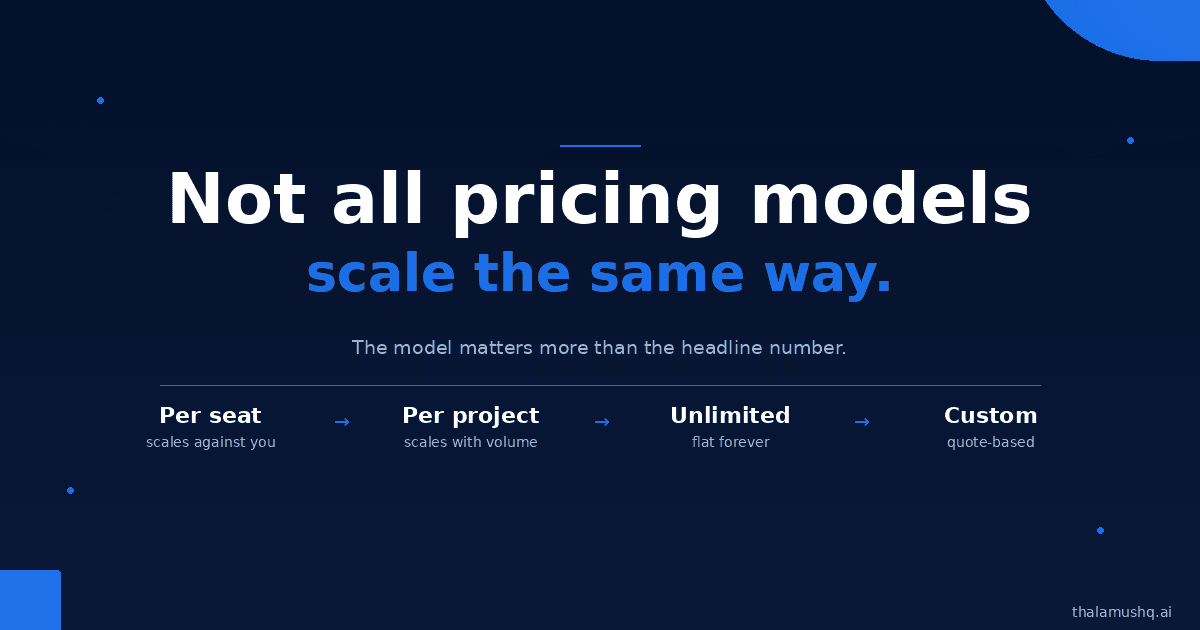
Understanding the AI RFP tools pricing model matters more than the headline number. The model determines how your cost scales and whether you will face a budget conversation every time your team or proposal volume grows.

RFP Software Cost Per User: The Per-Seat Model

The per-seat model charges based on the number of people who need platform access. It is the most common pricing structure among legacy enterprise RFP platforms.

How does it work?

You pay a monthly or annual fee multiplied by the number of licensed users. A 10-user team paying $50/user/month pays $6,000/year. The same team of 30 users pays $18,000/year, a 200% cost increase for the same software. 

What does it mean in practice? 

Per-seat pricing creates a financial disincentive to involve everyone who should be involved in a bid. When adding a legal reviewer, a pricing specialist, or a technical SME triggers a new license fee, proposal leads think twice about expanding the contributor circle. This is the opposite of what produces better proposals.

Verified G2 and Capterra reviews for major per-seat platforms consistently include comments such as "wish their pricing was more flexible with the number of users" and "the seat-based pricing makes me think twice about expanding to internal teams that would add value."

Where is this model common? 

Loopio, Responsive (RFPIO), Qvidian (Upland), and most legacy enterprise platforms use variations of this model.

Per-seat cost range (industry estimates from G2 and Gartner Peer Insights):

  • Entry-level legacy platforms: $35–$75/user/month

  • Mid-market enterprise platforms: $75–$150/user/month

  • Premium enterprise platforms: $150–$300+/user/month

The Project-Based RFP Software Pricing Model

Project-based pricing charges by the number of RFPs or bid packages completed, not by the number of users.

How does it work? 

You pay per proposal or per project, with team size not factoring into the bill. Unlimited contributors can work on each bid without triggering additional seat costs.

What does it mean in practice? 

This model is highly cost-effective for teams with stable, predictable RFP volume. It becomes unpredictable or expensive for teams with highly variable volume - a quiet quarter followed by a bid-heavy quarter produces unpredictable invoices.

The Unlimited-User RFP Software Subscription Model

The unlimited-user model charges a flat fee for the platform regardless of how many people use it or how many projects run simultaneously.

How does it work? 

One subscription. One price. Every SME, every legal reviewer, every delivery lead, every executive approver, included.

What does it mean in practice? 

This model removes the disincentive to involve stakeholders. The platform cost does not grow when a new bid requires additional contributors. This directly addresses the most common complaint about per-seat legacy platforms.

The scaling math: 

A per-seat platform at $100/user/month costs $12,000/year for a 10-person team and $60,000/year for a 50-person team, a 400% increase for the same software. An unlimited-user platform at the same $25,000/year costs $25,000/year regardless of whether 10 people or 50 people use it.

Where is this model available?

Thalamus AI's unlimited-user, unlimited-project subscription model means every stakeholder can participate without a pricing conversation. Contact for enterprise pricing.

The Custom Enterprise RFP Software Pricing Model

Custom enterprise pricing is quote-based, no published tiers, no public numbers, all configured based on your organization's specific requirements.

How does it work?

You engage with the vendor's team, describe your requirements, and receive a pricing proposal based on team size, feature needs, implementation complexity, and contract terms. 

This model is common across both legacy and modern enterprise platforms, including Thalamus AI, because the variables genuinely differ enough between organizations that a single published number would be misleading.

What does it mean in practice? 

The lack of a published sticker price makes early-stage comparison harder. The right approach is to use the cost ranges and variable framework in this guide to enter every vendor conversation knowing what to ask, what drives the number up, what can be scoped differently, and what the Year 3 cost looks like at your projected team size.

Where is this model common? 

Qvidian (Upland), Loopio, Responsive (RFPIO), AutogenAI, Thalamus AI, and most enterprise-grade platforms use fully custom pricing models.

Understanding the AI RFP tools pricing model matters more than the headline number. The model determines how your cost scales and whether you will face a budget conversation every time your team or proposal volume grows.

RFP Software Cost Per User: The Per-Seat Model

The per-seat model charges based on the number of people who need platform access. It is the most common pricing structure among legacy enterprise RFP platforms.

How does it work?

You pay a monthly or annual fee multiplied by the number of licensed users. A 10-user team paying $50/user/month pays $6,000/year. The same team of 30 users pays $18,000/year, a 200% cost increase for the same software. 

What does it mean in practice? 

Per-seat pricing creates a financial disincentive to involve everyone who should be involved in a bid. When adding a legal reviewer, a pricing specialist, or a technical SME triggers a new license fee, proposal leads think twice about expanding the contributor circle. This is the opposite of what produces better proposals.

Verified G2 and Capterra reviews for major per-seat platforms consistently include comments such as "wish their pricing was more flexible with the number of users" and "the seat-based pricing makes me think twice about expanding to internal teams that would add value."

Where is this model common? 

Loopio, Responsive (RFPIO), Qvidian (Upland), and most legacy enterprise platforms use variations of this model.

Per-seat cost range (industry estimates from G2 and Gartner Peer Insights):

  • Entry-level legacy platforms: $35–$75/user/month

  • Mid-market enterprise platforms: $75–$150/user/month

  • Premium enterprise platforms: $150–$300+/user/month

The Project-Based RFP Software Pricing Model

Project-based pricing charges by the number of RFPs or bid packages completed, not by the number of users.

How does it work? 

You pay per proposal or per project, with team size not factoring into the bill. Unlimited contributors can work on each bid without triggering additional seat costs.

What does it mean in practice? 

This model is highly cost-effective for teams with stable, predictable RFP volume. It becomes unpredictable or expensive for teams with highly variable volume - a quiet quarter followed by a bid-heavy quarter produces unpredictable invoices.

The Unlimited-User RFP Software Subscription Model

The unlimited-user model charges a flat fee for the platform regardless of how many people use it or how many projects run simultaneously.

How does it work? 

One subscription. One price. Every SME, every legal reviewer, every delivery lead, every executive approver, included.

What does it mean in practice? 

This model removes the disincentive to involve stakeholders. The platform cost does not grow when a new bid requires additional contributors. This directly addresses the most common complaint about per-seat legacy platforms.

The scaling math: 

A per-seat platform at $100/user/month costs $12,000/year for a 10-person team and $60,000/year for a 50-person team, a 400% increase for the same software. An unlimited-user platform at the same $25,000/year costs $25,000/year regardless of whether 10 people or 50 people use it.

Where is this model available?

Thalamus AI's unlimited-user, unlimited-project subscription model means every stakeholder can participate without a pricing conversation. Contact for enterprise pricing.

The Custom Enterprise RFP Software Pricing Model

Custom enterprise pricing is quote-based, no published tiers, no public numbers, all configured based on your organization's specific requirements.

How does it work?

You engage with the vendor's team, describe your requirements, and receive a pricing proposal based on team size, feature needs, implementation complexity, and contract terms. 

This model is common across both legacy and modern enterprise platforms, including Thalamus AI, because the variables genuinely differ enough between organizations that a single published number would be misleading.

What does it mean in practice? 

The lack of a published sticker price makes early-stage comparison harder. The right approach is to use the cost ranges and variable framework in this guide to enter every vendor conversation knowing what to ask, what drives the number up, what can be scoped differently, and what the Year 3 cost looks like at your projected team size.

Where is this model common? 

Qvidian (Upland), Loopio, Responsive (RFPIO), AutogenAI, Thalamus AI, and most enterprise-grade platforms use fully custom pricing models.

Understanding the AI RFP tools pricing model matters more than the headline number. The model determines how your cost scales and whether you will face a budget conversation every time your team or proposal volume grows.

RFP Software Cost Per User: The Per-Seat Model

The per-seat model charges based on the number of people who need platform access. It is the most common pricing structure among legacy enterprise RFP platforms.

How does it work?

You pay a monthly or annual fee multiplied by the number of licensed users. A 10-user team paying $50/user/month pays $6,000/year. The same team of 30 users pays $18,000/year, a 200% cost increase for the same software. 

What does it mean in practice? 

Per-seat pricing creates a financial disincentive to involve everyone who should be involved in a bid. When adding a legal reviewer, a pricing specialist, or a technical SME triggers a new license fee, proposal leads think twice about expanding the contributor circle. This is the opposite of what produces better proposals.

Verified G2 and Capterra reviews for major per-seat platforms consistently include comments such as "wish their pricing was more flexible with the number of users" and "the seat-based pricing makes me think twice about expanding to internal teams that would add value."

Where is this model common? 

Loopio, Responsive (RFPIO), Qvidian (Upland), and most legacy enterprise platforms use variations of this model.

Per-seat cost range (industry estimates from G2 and Gartner Peer Insights):

  • Entry-level legacy platforms: $35–$75/user/month

  • Mid-market enterprise platforms: $75–$150/user/month

  • Premium enterprise platforms: $150–$300+/user/month

The Project-Based RFP Software Pricing Model

Project-based pricing charges by the number of RFPs or bid packages completed, not by the number of users.

How does it work? 

You pay per proposal or per project, with team size not factoring into the bill. Unlimited contributors can work on each bid without triggering additional seat costs.

What does it mean in practice? 

This model is highly cost-effective for teams with stable, predictable RFP volume. It becomes unpredictable or expensive for teams with highly variable volume - a quiet quarter followed by a bid-heavy quarter produces unpredictable invoices.

The Unlimited-User RFP Software Subscription Model

The unlimited-user model charges a flat fee for the platform regardless of how many people use it or how many projects run simultaneously.

How does it work? 

One subscription. One price. Every SME, every legal reviewer, every delivery lead, every executive approver, included.

What does it mean in practice? 

This model removes the disincentive to involve stakeholders. The platform cost does not grow when a new bid requires additional contributors. This directly addresses the most common complaint about per-seat legacy platforms.

The scaling math: 

A per-seat platform at $100/user/month costs $12,000/year for a 10-person team and $60,000/year for a 50-person team, a 400% increase for the same software. An unlimited-user platform at the same $25,000/year costs $25,000/year regardless of whether 10 people or 50 people use it.

Where is this model available?

Thalamus AI's unlimited-user, unlimited-project subscription model means every stakeholder can participate without a pricing conversation. Contact for enterprise pricing.

The Custom Enterprise RFP Software Pricing Model

Custom enterprise pricing is quote-based, no published tiers, no public numbers, all configured based on your organization's specific requirements.

How does it work?

You engage with the vendor's team, describe your requirements, and receive a pricing proposal based on team size, feature needs, implementation complexity, and contract terms. 

This model is common across both legacy and modern enterprise platforms, including Thalamus AI, because the variables genuinely differ enough between organizations that a single published number would be misleading.

What does it mean in practice? 

The lack of a published sticker price makes early-stage comparison harder. The right approach is to use the cost ranges and variable framework in this guide to enter every vendor conversation knowing what to ask, what drives the number up, what can be scoped differently, and what the Year 3 cost looks like at your projected team size.

Where is this model common? 

Qvidian (Upland), Loopio, Responsive (RFPIO), AutogenAI, Thalamus AI, and most enterprise-grade platforms use fully custom pricing models.

What Drives RFP Software Pricing Up? The Six Variables
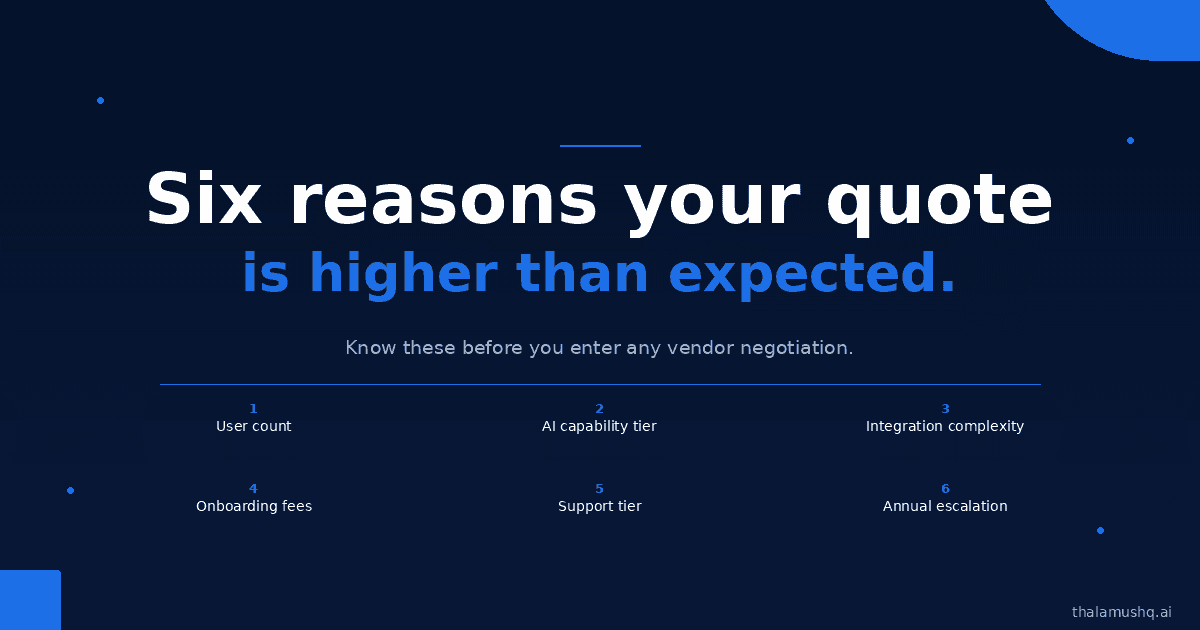
Understanding why your quote is what it is helps you negotiate more effectively and identify where cost can be reduced without sacrificing capability.

  • User count: The most direct driver of cost on per-seat platforms. Every additional user adds to the monthly or annual bill. The practical implication: proposal teams that genuinely need 15–30 contributors participating per bid will find per-seat pricing punishing at scale.

  • AI capability tier: On most legacy platforms, the AI features, auto-fill, content generation, AI Assist, and smart search are premium add-ons, not standard features. The base subscription typically covers content library access and basic collaboration; the AI layer costs extra.

  • Integration complexity: Standard integrations with Salesforce, SharePoint, and Google Drive are often included. Custom integrations, dedicated API access, and connections to bespoke internal systems typically add to the implementation cost and may carry ongoing maintenance fees.

  • Implementation and onboarding: Enterprise platforms typically require professional services for platform configuration, content library migration, workflow setup, and user training. These are often billed separately from the license and can add $5,000–$25,000+ to the Year 1 cost.

  • Support tier: Basic documentation-level support is usually included. Dedicated account management, SLA-backed response times, and priority engineering support are typically premium tiers adding 15–25% to the base subscription cost (industry analyst estimates, 2026).

  • Annual price increases: Enterprise software contracts typically include annual price escalation clauses of 3–7%. A $25,000/year platform with a 5% annual increase costs $30,288/year in year four, before any seat additions or feature upgrades.

RFP Software Hidden Costs That Double Your Bill
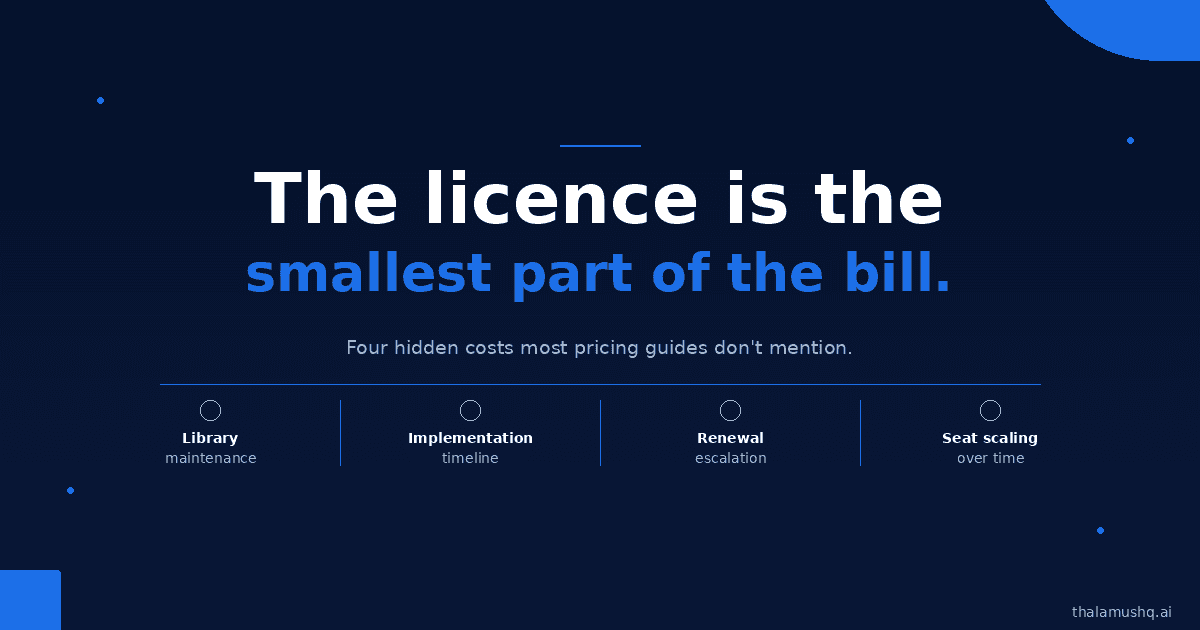
This is the section that most pricing guides skip. The visible cost is the license. The real cost includes everything else.

Content Library Setup and Ongoing Maintenance Overhead

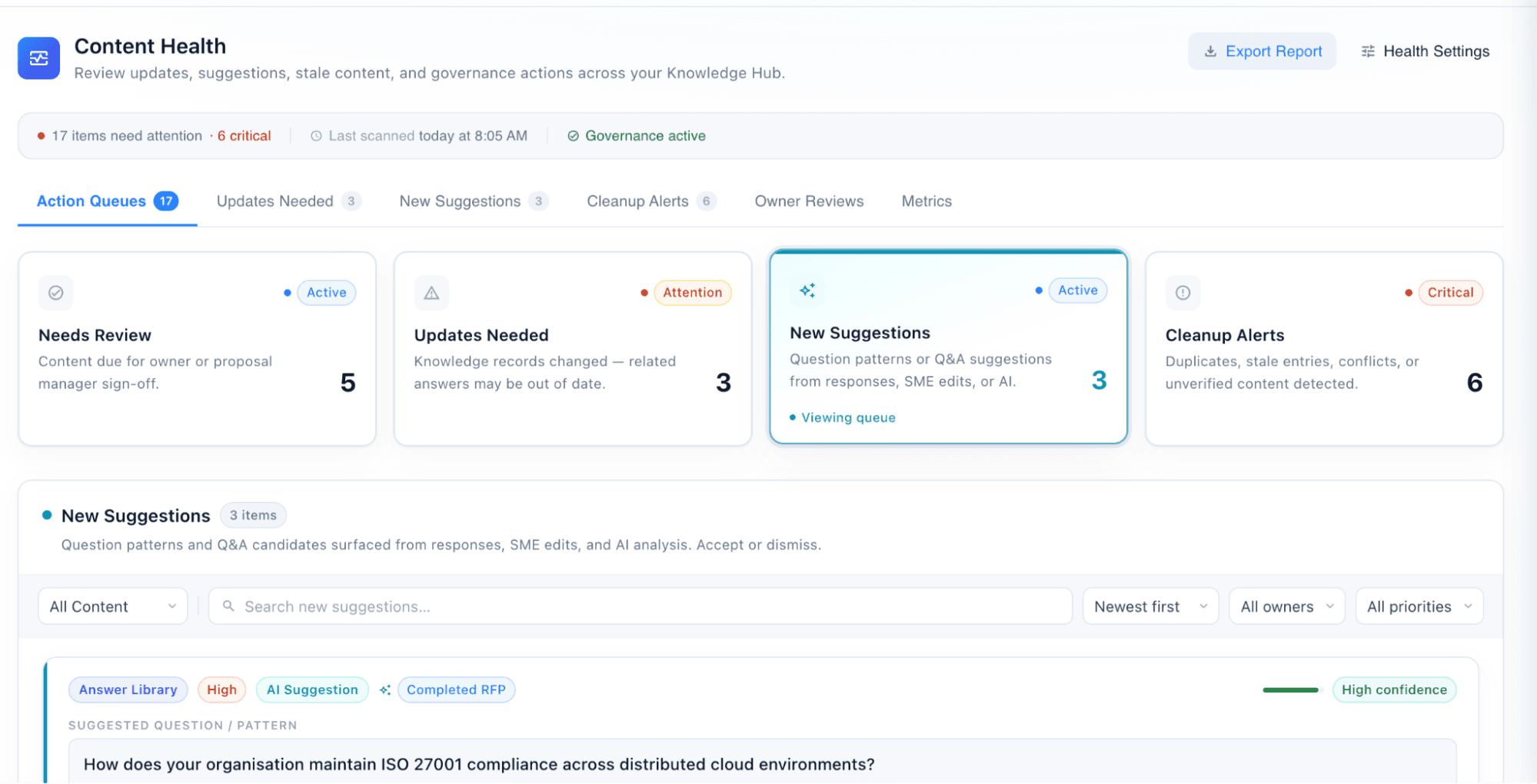
Legacy RFP platforms like Loopio, Responsive, and Qvidian store knowledge as Q&A pairs in a content library. Building that library, tagging it correctly, removing duplicates, updating outdated answers, and keeping it current enough for the AI to use reliably is ongoing work. It is not a one-time setup cost.

This maintenance typically requires a dedicated content owner, often a senior proposal professional whose loaded cost may exceed the platform license itself. Verified user reviews on G2 and Capterra consistently describe library maintenance as one of the most significant ongoing time investments associated with these platforms.
Tools that eliminate the library-maintenance model, by grounding AI answers in live source documents or verified knowledge entities, significantly reduce this hidden cost.

Implementation Timeline as a Hidden Cost

A lower monthly license is not cheaper if the platform takes six to eight weeks to deploy before it can answer a live RFP. During the implementation period, proposal teams are paying for a platform they cannot use, while still producing proposals through their existing manual process. 

The industry analyst estimates for implementation time on legacy enterprise platforms is four to eight weeks; for custom AI-native platforms with bespoke training, longer.

Annual Renewal Escalation

Enterprise software contracts regularly include price escalation clauses that are easy to overlook when signing and expensive to absorb at renewal. A $20,000/year platform with a 7% escalation clause costs $26,215/year by year four and $31,058/year by year seven, before any user additions.

Seat Scaling as RFP Complexity Grows

As bids grow more complex and more stakeholders need to contribute, per-seat platforms become more expensive. A team that starts with 10 licensed users and grows its contributor base to 25 over three years faces a 150% increase in seat cost on a per-seat model, even if no other features or services change.

AI RFP Software Pricing: How the New Generation Is Priced Differently?
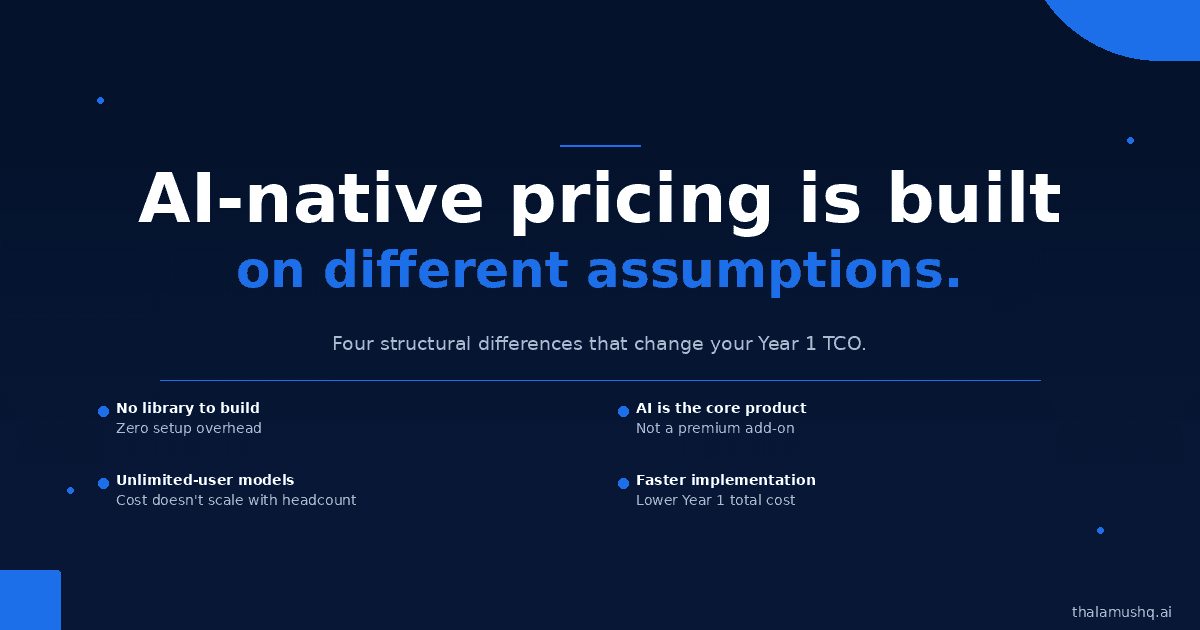
The pricing models used by AI-native RFP platforms built in 2022–2026 are structurally different from the models used by legacy platforms built in 2005–2015, and understanding the difference is important for anyone building a three-year total cost of ownership model.

What Makes AI RFP Software Pricing Different? 

No library to build: 

Platforms with verified knowledge layers or live source integrations can reduce the content library setup and maintenance overhead that dominates the hidden cost of legacy platforms. This changes the Year 1 TCO calculation significantly.

AI is the core product, not an add-on: 

On legacy platforms, AI Assist is a premium tier. On AI-native platforms, the AI capability is the foundation; there is no "non-AI" version of the platform. This means the AI cost is baked into the base subscription rather than stacked on top.

Unlimited-user models are more common: 

Newer platforms are more likely to offer unlimited-user pricing, which changes the scaling economics entirely for teams whose contributor count grows with bid complexity.

Faster implementation, lower Year 1 cost:

AI-native platforms built for rapid deployment have significantly lower implementation overhead than legacy enterprise platforms requiring professional services engagements. Lower time-to-value means lower Year 1 cost, even when the annual license is comparable.

For a full comparison of platforms across AI architecture, lifecycle coverage, and pricing model, see our 12 Best AI RFP Software Tools in 2026.

Evaluating RFP software and want to understand how Thalamus AI's pricing compares to your current platform or shortlist? Our team can walk you through a real TCO comparison in 30 minutes. → Get a personalized Recommendation

RFP Software Pricing Comparison by Platform: What Major Platforms Cost in 2026?

The table below reflects published pricing where available, and verified industry estimates from G2, Gartner Peer Insights, Capterra, and TrustRadius user community reports where not. All figures are subject to change; contact each vendor directly for a current quote.

Platform

Pricing model

Published pricing

Estimated enterprise range

Free trial?

Is AI included in the base?

Thalamus AI

Unlimited users + unlimited projects; one subscription

Contact for enterprise pricing

Contact for pricing

3-month pilot available

✓ Native agentic AI

Loopio

Seat-based enterprise

No public pricing

~$20,000+/year base (G2/Capterra estimates)

No

⚡ AI layered on

Responsive (RFPIO)

Seat-based enterprise

No public pricing

~$20,000+/year base (G2/Capterra estimates)

No

⚡ AI layered on

Qvidian (Upland)

Seat-based; custom enterprise

No public pricing

~$15,000–$25,000+/year base (industry estimates)

No

⚡ AI Assist add-on

AutogenAI

Custom enterprise; seat commitments

No public pricing

Premium enterprise; contact for a quote

No

✓ Bespoke language engine

Tribble

Consumption-based; custom

No public pricing

Contact for a quote

Limited

✓ AI-native

HeyIris (Iris AI)

Per-user; unlimited collaborators

No public pricing

Contact for a quote

Limited

✓ AI-native

Arphie

Custom enterprise

No public pricing

Contact for a quote

No

✓ AI-native

Inventive AI

Custom

No public pricing

Contact for a quote

No

✓ AI-native

AutoRFP AI

Project-based; unlimited users

Scale: $899/mo; Accelerate: $1,299/mo

Enterprise: custom

30-day money-back

✓ AI-native

1Up

Tiered flat rate

Free; $300/mo; $900/mo

Enterprise: custom

Free plan available

✓ AI-first

Generic LLMs

Per-user subscription

$20–$25/mo (Pro tiers)

N/A

Limited free tiers

✓ General-purpose only

Sources: G2 RFP Software category (Spring 2026), Gartner Peer Insights, Capterra, TrustRadius. Enterprise range estimates are based on verified user community reports and industry analyst data; contact each vendor directly for accurate quotes.

The Real Total Cost of RFP Software Ownership by Team Size
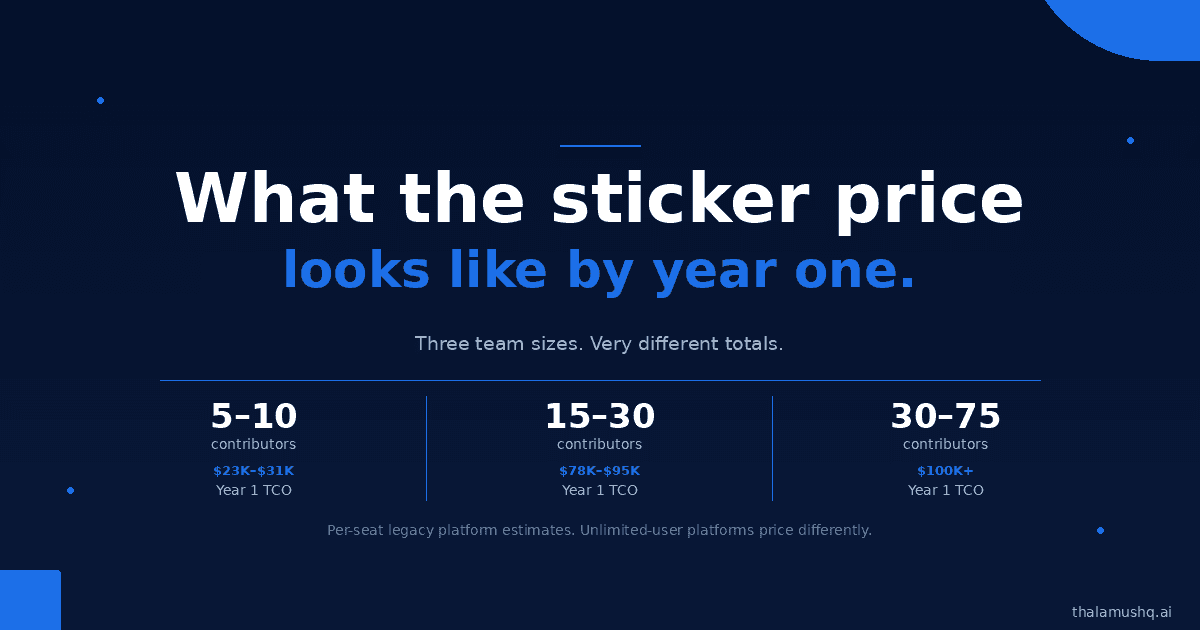
The sticker price is the starting point. This section shows what the number actually looks like once the pricing model plays out across a realistic team and RFP volume.

Small Proposal Team: 5–10 Contributors, 20–50 RFPs/Year

Per-seat legacy platform at $100/user/month:

  • 10 users × $100/month × 12 = $12,000/year license

  • Add implementation: +$5,000–$10,000

  • Add content library setup time (est. 40 hours at $75/hr average): +$3,000

  • Add AI tier upgrade: +$3,000–$6,000

  • Estimated Year 1 TCO: $23,000–$31,000

Unlimited-user platform (Thalamus AI) 

  • Fixed subscription regardless of contributor count

  • Minimal to no implementation overhead (AI-native, rapid deployment)

  • No library maintenance overhead

  • Year 1 TCO reflects subscription cost only

Mid-Size Proposal Operation: 15–30 Contributors, 50–150 RFPs/Year

Per-seat legacy platform at $100/user/month:

  • 25 users × $100/month × 12 = $30,000/year license

  • Add implementation: +$10,000–$20,000

  • Add dedicated content owner (50% of one FTE at $60K loaded cost): +$30,000

  • Add AI tier upgrade: +$8,000–$15,000

  • Estimated Year 1 TCO: $78,000–$95,000

The content owner cost is the most commonly overlooked line in the TCO calculation. Legacy platforms require ongoing library maintenance, and that maintenance has a fully-loaded labor cost that rarely appears in the software budget.

Large Enterprise Bid Team: 30–75 Contributors, 150+ RFPs/Year

At this scale, per-seat costs, content library maintenance, and implementation professional services combine to push total cost well above $100,000/year on legacy platforms, a figure that G2 and Gartner Peer Insights user reports on the most established enterprise platforms confirm is not unusual.

At this same scale, unlimited-user platforms with no library maintenance overhead and rapid deployment represent a fundamentally different cost structure, one where adding the 40th contributor or the 200th RFP does not trigger a budget conversation.

How to Choose the Right RFP Software Pricing Model for Your Team?

If your team is small and your bids are simple

Start with a self-serve tool. If you are answering fewer than 20 RFPs per year and most of them are structured questionnaires under 50 questions, the per-unit cost of enterprise software is difficult to justify. 

A modern AI-native tool at the lower pricing tier, or even a general-purpose AI model with good prompting discipline, may be the right starting point. See our Thalamus AI vs General LLMs comparison for an honest assessment of where general-purpose AI hits its limits.

If your team is growing and bids are getting more complex

Per-seat pricing will become your most visible budget line before you expect it. Every new SME, every new legal reviewer, every executive approver who needs a login adds to the monthly bill. 

Model out the Year 3 per-seat cost before signing a Year 1 contract; many teams find the Year 3 number is 2–3x the Year 1 number, which changes the ROI calculation significantly. Our Thalamus AI vs Loopio comparison shows this math in detail for one of the most common per-seat platforms in the category.

If your team runs complex, multi-stakeholder bids

The pricing model that matters most is not the one that looks cheapest in Year 1; it is the one that does not penalize you for involving everyone who should be involved in every bid. 

When the cost of adding a security reviewer, a pricing specialist, or a delivery lead to a proposal is zero, you involve them. When it triggers a license cost, you think twice. The proposals that win are the ones where the right people contributed.

An unlimited-user, unlimited-project model removes that disincentive entirely — and at enterprise bid complexity, that structural change in team behavior is often worth more than the headline pricing difference.

RFP Software Pricing FAQ: What Buyers Ask Most in 2026

How much does RFP software cost in 2026? 

It depends on the pricing model and platform tier. General-purpose AI tools cost $20–25/month per user. Purpose-built AI-native tools range from free (starter tiers) to $1,300/month for published tiers with unlimited users. 

Enterprise legacy platforms like Loopio, Responsive, and Qvidian typically start at $15,000–$25,000/year based on verified user community reports on G2, Gartner Peer Insights, and Capterra, with real enterprise TCO often significantly higher once AI add-ons, implementation, and seat scaling are included.

What is the cheapest RFP software in 2026? 

If the question is the lowest subscription cost, free tiers exist on 1Up and general-purpose AI tools. If the question is the lowest total cost of ownership across a 3-year period for a 20-person team running 50+ RFPs per year, the cheapest option is usually a platform with no library maintenance overhead, rapid deployment, and unlimited-user pricing, because the hidden costs of legacy platforms accumulate far beyond the base license in the second and third year.

Is there free RFP software? 

Yes. 1Up offers a free plan for questionnaire and sales question automation. General-purpose AI tools (ChatGPT, Claude, Gemini) offer free tiers that can generate proposal content with manual prompting. These options are viable for very low-volume, simple questionnaire use. They are not a substitute for a purpose-built platform when bids are complex, multi-stakeholder, and compliance-sensitive.

How much does Loopio cost? 

Loopio does not publish pricing publicly. Based on verified user community reports on G2 and Capterra, Loopio's entry-level Foundations plan starts at approximately $20,000/year. 

Higher tiers (Enhanced, Enterprise) are custom-priced based on team size, feature requirements, and contract terms. For teams evaluating a switch, see 10 Best Loopio Alternatives in 2026.

How much does Responsive (RFPIO) cost? 

Responsive does not publish pricing publicly. Based on verified user community reports on G2 and Capterra, the Foundations plan is estimated at approximately $20,000+/year. Premium enterprise tiers are custom-quoted. G2 users consistently note that the platform's seat-based model becomes expensive as contributor count grows.

What are the hidden costs of RFP software? 

The five most consistently reported hidden costs across G2, Capterra, TrustRadius, and Gartner Peer Insights reviews are: implementation and onboarding professional services ($5,000–$25,000+); content library setup and ongoing maintenance overhead (often equivalent to a part-time or full-time role); AI feature add-ons not included in the base license; seat-scaling costs as the contributor base grows; and annual price escalation clauses (3–7% standard across enterprise software contracts).

What is the best pricing model for RFP software? 

For teams with stable headcount and variable RFP volume: flat-rate or project-based pricing. For teams with growing headcount and high bid complexity: unlimited-user subscription, which removes the per-seat growth penalty. For teams with established procurement budgets and existing content libraries: custom enterprise pricing from a legacy platform. 

The worst match is per-seat pricing for teams whose bid complexity requires 20+ contributors; the seat cost becomes the most expensive line in the proposal operations budget.

Is per-user or unlimited pricing better for RFP teams? 

Unlimited pricing is structurally better for any team whose bid process requires contributions from people outside the core proposal team. When every SME, every legal reviewer, every pricing specialist, and every executive approver can be looped in without triggering a license fee, proposal quality improves. 

When the cost of adding contributors is zero, teams make better bids. The per-seat model creates the opposite incentive, a financial reason to keep the contributor circle small.

How do I justify the cost of RFP software to my CFO? 

The strongest business case is built around three numbers: time saved per response (industry estimates suggest 60–80% reduction in response time on purpose-built platforms), the labor cost of that time at your team's loaded rate, and the revenue impact of win-rate improvement. 

A team spending 40 hours per RFP across five people at a $75 loaded hourly rate is spending $15,000 of labor per bid, before software. A platform that reduces that to 15 hours saves $9,375 per bid. For a team running 50 bids per year, that is $468,750 in annual labor savings. Against that number, most RFP software costs look straightforwardly justifiable.

How much does AI RFP software cost? 

AI-native RFP software pricing in 2026 varies significantly by architecture and capability. Purpose-built AI-native platforms designed specifically for RFP response range from $300–$1,500/month for published mid-market tiers. 

Enterprise AI-native platforms covering the full bid lifecycle, with verified knowledge entities, compliance matrix generation, and institutional learning, are custom-priced based on team size and workflow configuration. For a full comparison of AI-native vs legacy platform pricing across leading RFP tools, see our 12 Best AI RFP Software Tools in 2026.

How does proposal software pricing compare to RFP software pricing? 

Proposal software such as Proposify, PandaDoc, Better Proposals, and similar tools is different from RFP software. 

Proposal tools typically start at $49–$99/month per user for SMB tiers, with enterprise pricing from $500–$1,000+/month. RFP software costs more because it addresses a more complex workflow: intake analysis, compliance tracking, multi-stakeholder coordination, and institutional knowledge management. If your use case is primarily sales proposals rather than competitive RFP responses, a proposal management tool is likely the right category.

The Bottom Line on RFP Software Pricing in 2026

The number that matters is not the license price, it is the total cost of ownership across three years, including the labor cost of maintaining whatever knowledge infrastructure the platform requires, the seat-scaling cost as your contributor base grows, and the implementation overhead in Year 1.

Enterprise RFP software is custom-priced across almost every serious platform in the category, including Thalamus AI. That is not evasion; it is an honest reflection of the fact that a 10-person team running 30 RFPs per year and a 50-person team running 200 complex government bids per year are not buying the same thing. 

The right approach is to enter those pricing conversations knowing the variables, knowing the ranges, and knowing what a Year 3 model looks like before you sign a Year 1 contract.

The platforms that look cheapest in Year 1 on a per-seat basis often look most expensive by Year 3 when seat scaling, library maintenance, and implementation overhead are modeled honestly. The platforms that look most expensive on a subscription basis often have the lowest total cost when maintenance overhead and seat scaling are removed from the equation.

The right platform is the one whose pricing model aligns with how your team actually works, not the one with the most favorable headline number in a comparison table.

Your next bid should not come with a seat-count conversation. See what unlimited-user, AI-native bid infrastructure looks like in practice → Book Your Demo