
Harpreet Singh, MBA
Founder, Thalamus AI

With 12+ years in AI and enterprise software, including GenAI product work at Travelers Group, Harpreet writes about AI RFP software, AI bid tools, proposal operations, RFP response automation, and the future of enterprise bid management.

Best Conveyor Competitors 2026: Quick Comparison Table
Tool | Best for switching from Conveyor when... | G2 rating | Format scope | Trust Center | Human validation |
Thalamus AI | Need full bid lifecycle coverage across RFPs, DDQs, security questionnaires, portal responses, and proposals | Security Qs + RFPs + DDQs + proposals | ✗ Not a Trust Center focus | ✗ AI-generated with human review gates | |
HeyIris (Iris AI) | Confidence-scored, citable answers and strong portal AutoFill matter most | Security Qs + RFPs + DDQs | ✗ | ✗ | |
Vanta | Already building SOC 2 / ISO 27001 and want questionnaire answers grounded in live compliance evidence | Security Qs + compliance assessments | ✓ Trust Center | ✗ | |
SecurityPal | High-value deals where a wrong answer creates contractual liability and analyst validation is required | NA | Security Qs + DDQs | ✓ Free Trust Center | ✓ Certified analysts |
Arphie | No separate knowledge library wanted; answers from live source systems with source attribution | Security Qs + RFPs + DDQs | ✗ | ✗ | |
Skypher | Complex portal formats (Archer, OneTrust, ServiceNow) and Excel with macros/conditional logic | NA | Security Qs + complex Excel/Word/portals | ✗ | ✗ |
Responsive (RFPIO) | Deep Salesforce integration and high-volume security questionnaire management in one library | Security Qs + RFPs + DDQs | ✗ | ✗ | |
Loopio | Governed content library with outstanding customer support across security Qs and RFPs | Security Qs + RFPs + DDQs | ✗ | ✗ | |
SafeBase (by Drata) | Compliance platform already on Drata and want Trust Center + questionnaire automation bundled | NA | Security Qs + compliance assessments | ✓ Trust Center | ✗ |
1Up | Small teams wanting free, Slack-native security questionnaire answers at zero initial cost | Security Qs + sales questions | ✗ | ✗ |
10 Best Conveyor Alternatives in 2026: Full Reviews
1. Thalamus AI - Best Conveyor Alternative for Teams Whose Workload Expanded Beyond Security Questionnaires
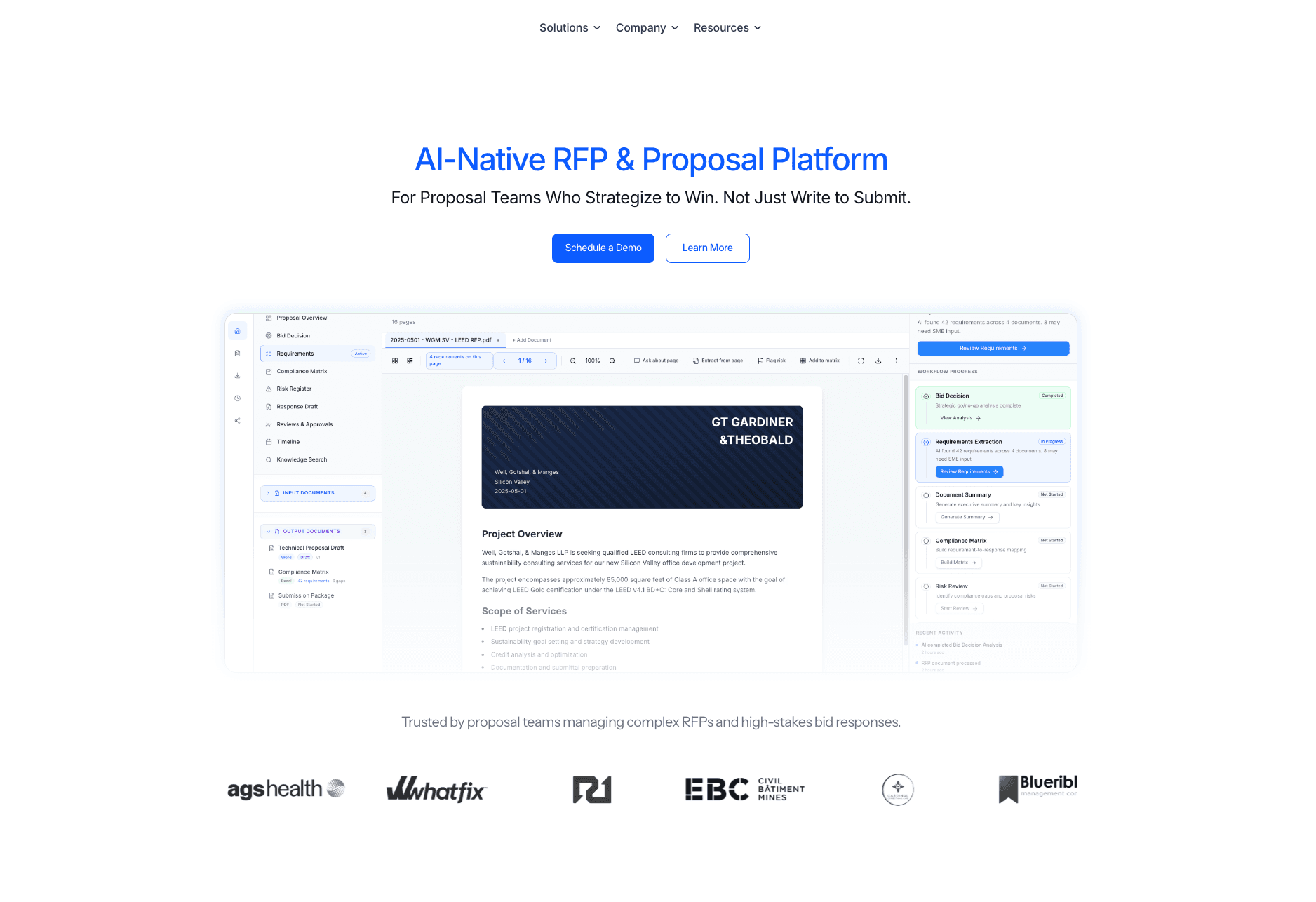
Switch from Conveyor when: Security questionnaires, RFPs, procurement DDQs, and vendor proposals now need to be managed as one bid lifecycle, and separate tools or disconnected workflows are creating coordination overhead, compliance risk, and knowledge fragmentation.
G2 rating: 5.0 / 5 ↗ G2
Pricing: Unlimited users, unlimited projects, one subscription. Three-month pilot pack available.
Knowledge model: Verified entity layer - source-linked, no credit ceiling, no Q&A curation.
What Thalamus AI Does Differently from Conveyor?
Covers the full bid lifecycle across security questionnaires, RFPs, DDQs, and formal proposals - Conveyor is strong for customer trust, security questionnaires, Trust Centers, and RFP response support. Thalamus AI goes broader across requirement mapping, compliance matrices, SME routing, addenda tracking, portal responses, source-linked proposal drafting, and post-bid learning.
No credit-based pricing ceiling - Conveyor's credit model constrains teams during high-volume bid periods. Thalamus AI's unlimited-project, unlimited-user subscription means a wave of simultaneous RFPs and security questionnaires does not generate a budget conversation.
Verified entity knowledge layer with source citations - Every AI-generated answer is traceable to a source document with a completeness score and last-verified timestamp, and can connect to CRM systems like Salesforce and HubSpot for account context. An AI-managed Content Health layer continuously flags duplicate, stale, or conflicting entries as exceptions for review, a more governance-ready model than Conveyor's document-retrieval approach for teams whose enterprise buyers conduct follow-up verification.
Full bid lifecycle coverage -
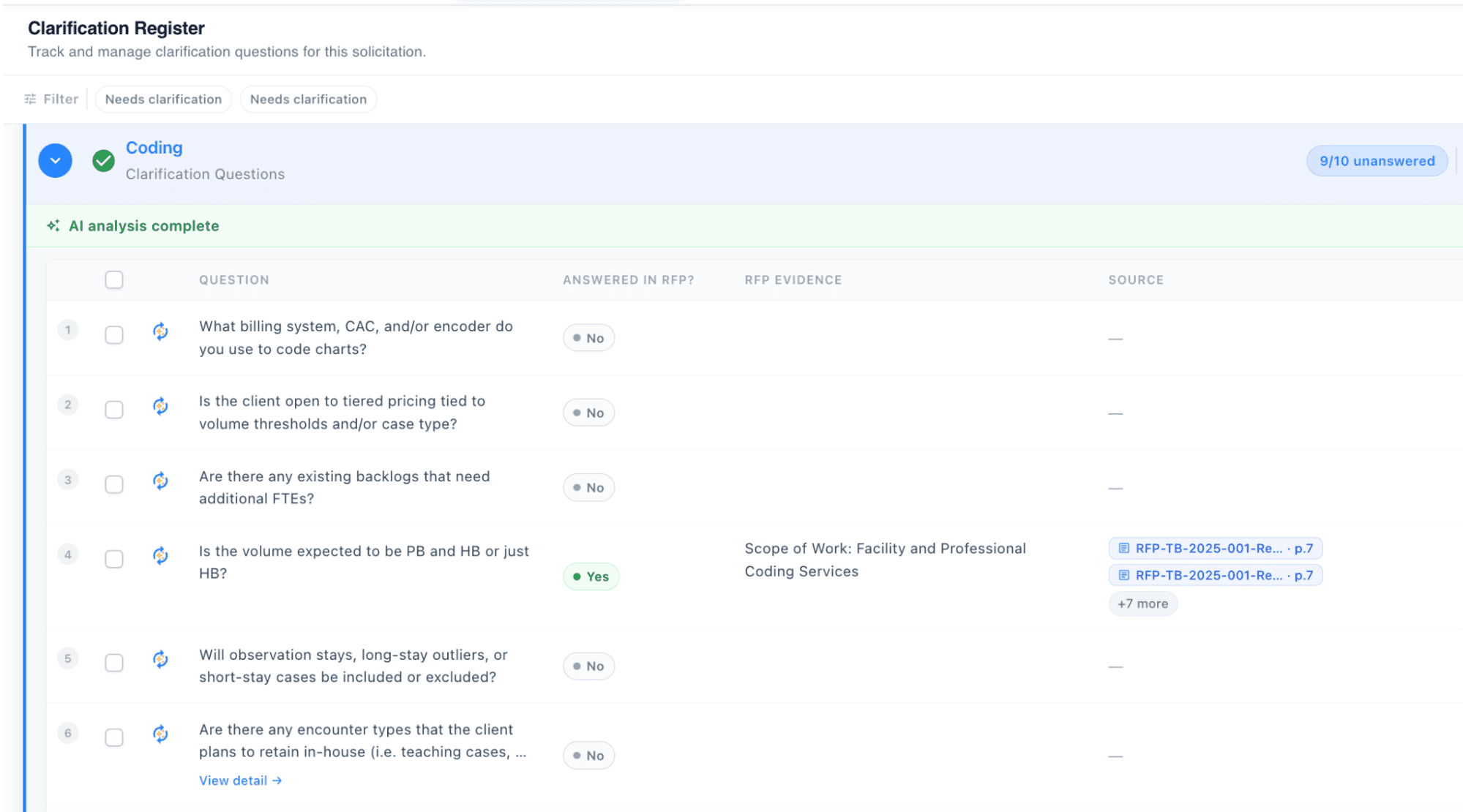
Beyond answer generation, Thalamus AI covers bid/no-bid, requirement mapping, compliance matrix creation, real-time addendum tracking, an AI Clarification Register that checks open questions against the RFP before submission, subsection-level RACI routing with pre-kickoff SME assignment, portal responses, source-linked drafting, and post-bid institutional learning. Conveyor’s center of gravity is customer trust and response automation; Thalamus AI is built as broader bid infrastructure.
Browser extension for portal questionnaires - Covers portal-based security questionnaire submissions without switching tabs, the same core capability as Conveyor's portal support, within a broader platform.
45+ language support for multinational vendor teams receiving questionnaires in multiple languages from global customer security teams.
Where Thalamus AI Falls Short as a Conveyor Alternative?
No Trust Center capability - Conveyor's Trust Center AI Agent deflects inbound questionnaire volume proactively, allowing buyers to self-serve answers before submitting a formal assessment. Thalamus AI does not offer an equivalent public-facing Trust Center. Teams for whom the inbound volume reduction is the primary value driver should weigh this directly.
Not the fastest path to value for security-questionnaire-only workflows - Teams whose entire workload is security questionnaires with no RFPs or DDQs alongside will find Conveyor, HeyIris, or Arphie faster to deploy for that specific format.
Initial setup investment is real - Entity ingestion, routing configuration, and approval chain setup require upfront time before the platform runs at full efficiency.
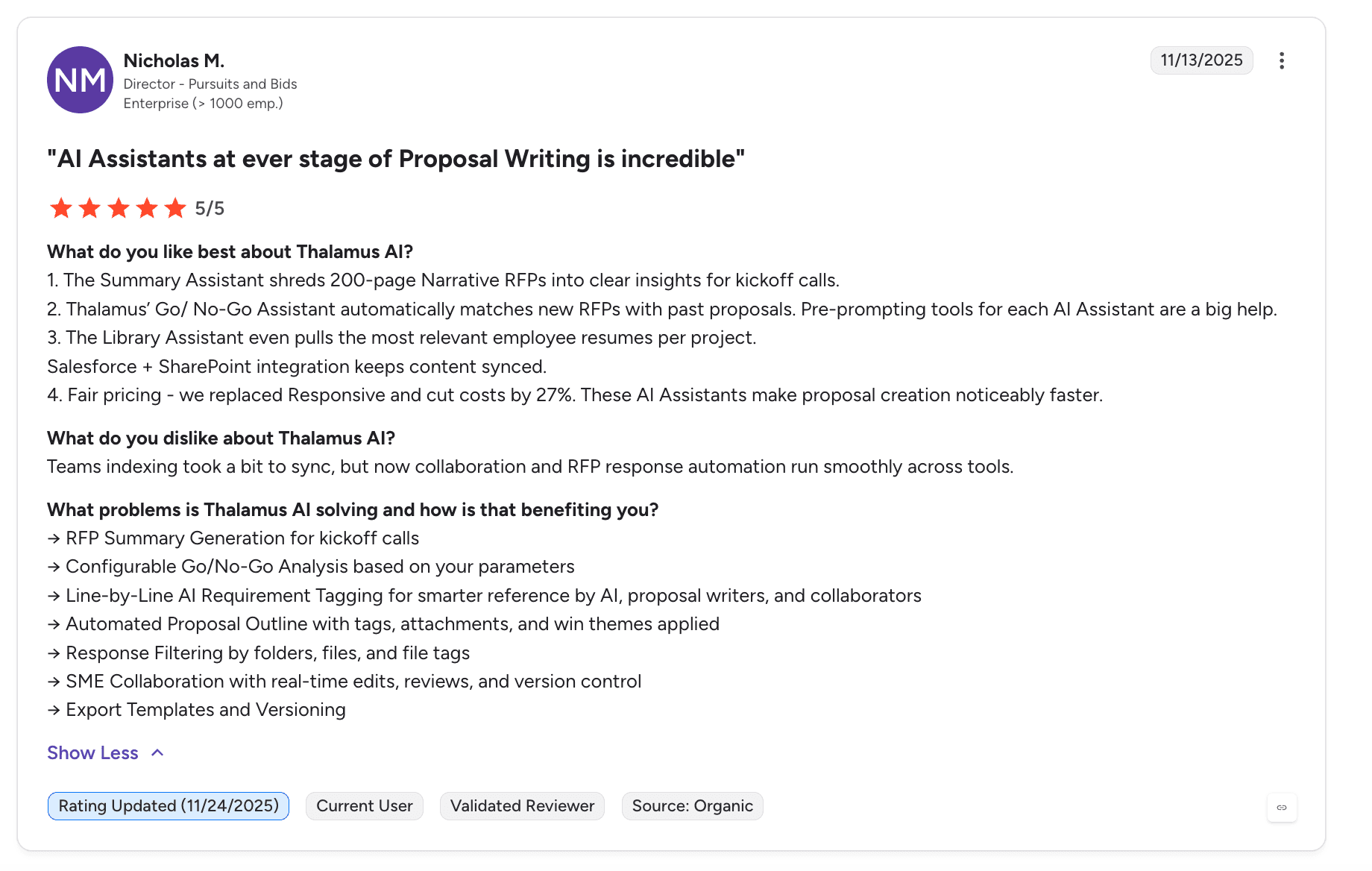
What Real Users Say About Thalamus AI on G2?
Who Should Switch from Conveyor to Thalamus AI?
Enterprise B2B and SaaS vendor teams that need one platform for security questionnaires, RFPs, procurement DDQs, portal responses, vendor proposals, compliance matrices, SME routing, and source-linked drafting - especially when usage predictability, governance, and full bid lifecycle coordination matter more than a customer-trust-only workflow.
Bring one live security questionnaire or RFP. We will show you how Thalamus AI handles it alongside your full assessment workload. → Start Your 3-Month Pilot
2. HeyIris (Iris AI) - Best Conveyor Alternative for Confidence-Scored, Citable Answers
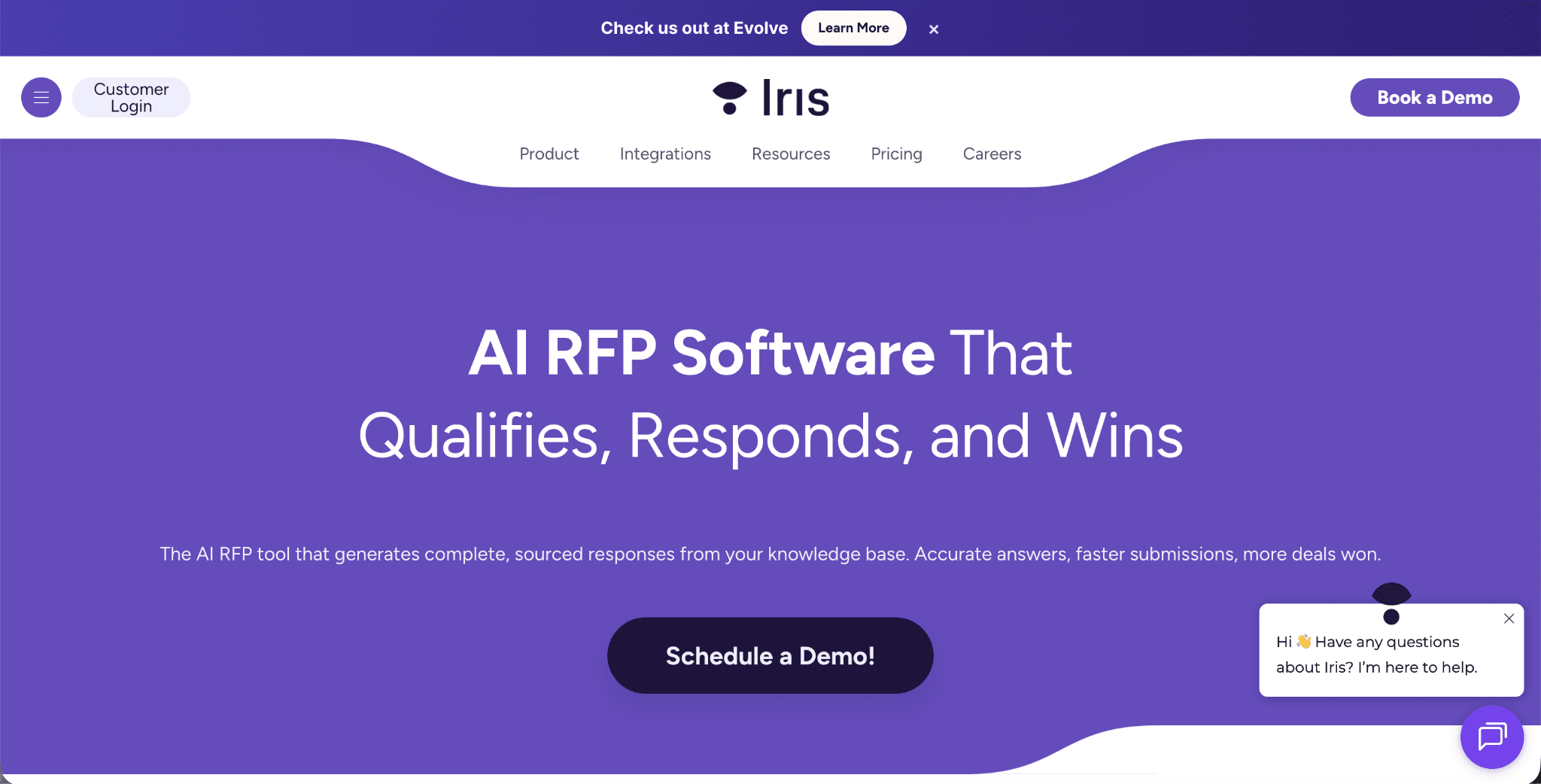
Switch from Conveyor when: Every security questionnaire answer needs a source citation and confidence score displayed before it goes out - and the team needs portal AutoFill as a primary, not secondary, capability.
G2 rating: 4.9 / 5 ↗ G2
Pricing: Per-user; unlimited collaborators. No public pricing.
What Does HeyIris Do Better Than Conveyor?
Inline confidence score and source citation on every answer - Conveyor generates answers from uploaded documentation. HeyIris adds a confidence percentage alongside each answer, making the verification workflow explicit rather than implicit. For security and legal teams that must sign off before answers go out, this eliminates a manual cross-check step.
Portal AutoFill for Whistic and BitSight - Native browser extension handles portal-based security questionnaire submissions directly in the portal interface, comparable to Conveyor's portal support but with an established G2 review base validating it in production.
Unlimited collaborators on per-user plans - Removes the contributor access friction that Conveyor's credit model can introduce when multiple team members are involved in a single questionnaire.
Go/no-go scoring with deal fit data - A qualification layer Conveyor does not offer, helps presales teams decide which questionnaires to prioritize when multiple arrive simultaneously.
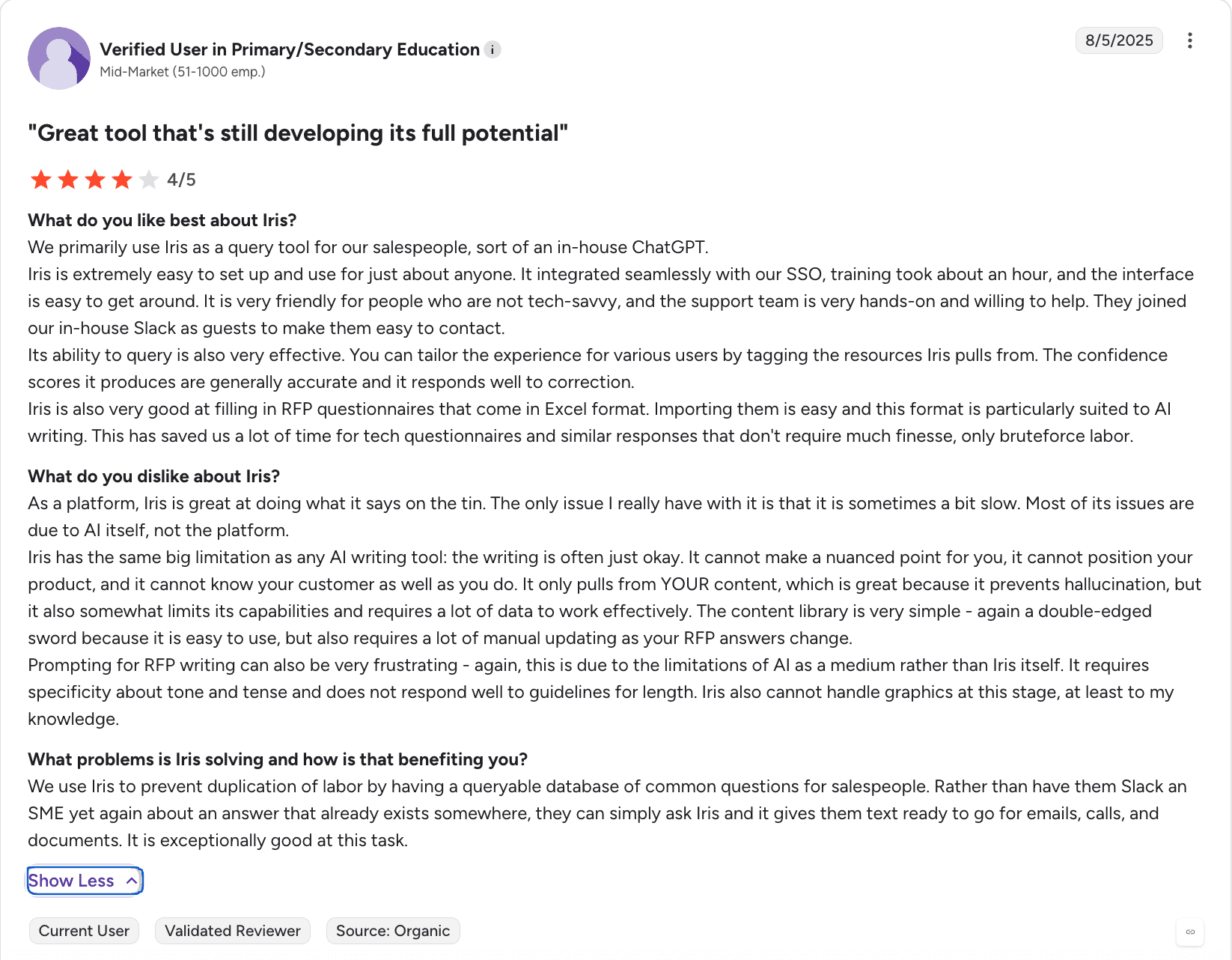
4.9/5 G2 rating across 66+ reviews - the most credible combination of rating and review volume for an AI-native tool in this evaluation.
Where HeyIris Falls Short?
No Trust Center - Conveyor's inbound volume reduction capability is absent.
Will not generate answers when knowledge coverage is incomplete, returns "not enough info" rather than a plausible-but-ungrounded answer.
What Real Users Say About HeyIris on G2?
Who Should Switch from Conveyor to HeyIris?
Presales and sales engineering teams whose primary frustration with Conveyor is the absence of explicit confidence scoring and source attribution on every answer, and who need strong portal AutoFill as a primary workflow requirement.
3. Vanta - Best Conveyor Alternative for Compliance-First Teams Grounding Answers in Live Evidence
Switch from Conveyor when: The team is actively managing SOC 2 or ISO 27001 compliance on Vanta and wants security questionnaire answers grounded in live compliance evidence rather than a separately maintained documentation library.
G2 rating: 4.6 / 5 ↗ G2
Pricing: Custom enterprise. No public pricing.
What Vanta Does Better Than Conveyor?
Questionnaire answers grounded in live compliance controls - When Vanta's compliance monitoring confirms a control is in place and evidence-backed, questionnaire answers reflecting that control are automatically authoritative, sourced from the same evidence a SOC 2 auditor would review. Conveyor draws from uploaded documentation that exists separately from the compliance program.
Trust Center with live compliance evidence - Vanta's Trust Center is more tightly integrated with the compliance monitoring layer than Conveyor's documentation-based version, so the Trust Center reflects the current compliance posture automatically as controls are updated.
Agentic questionnaire routing - Vanta's platform automatically routes questions requiring human input to the appropriate team member, with reminders and approval loops that reduce coordination overhead.
Where Vanta Falls Short as a Conveyor Alternative?
Compliance platform first, questionnaire tool second - If the team's certifications are already complete and the only pain is inbound questionnaire volume and turnaround speed, Vanta's full compliance platform pricing may be more than the questionnaire automation feature alone justifies.
Not built for RFPs, formal proposals, or procurement DDQs beyond security questionnaire scope.
Conveyor Trust Center vs Vanta Trust Center
Both offer public-facing Trust Centers where buyers can self-serve security documentation. The key difference: Conveyor's Trust Center is populated from uploaded documentation; Vanta's is populated from live compliance evidence fed by continuous monitoring. For teams actively maintaining SOC 2 or ISO 27001 on Vanta, the second model keeps the Trust Center current automatically. For teams whose compliance program is not on Vanta, Conveyor's documentation-based model is equivalent in practice.
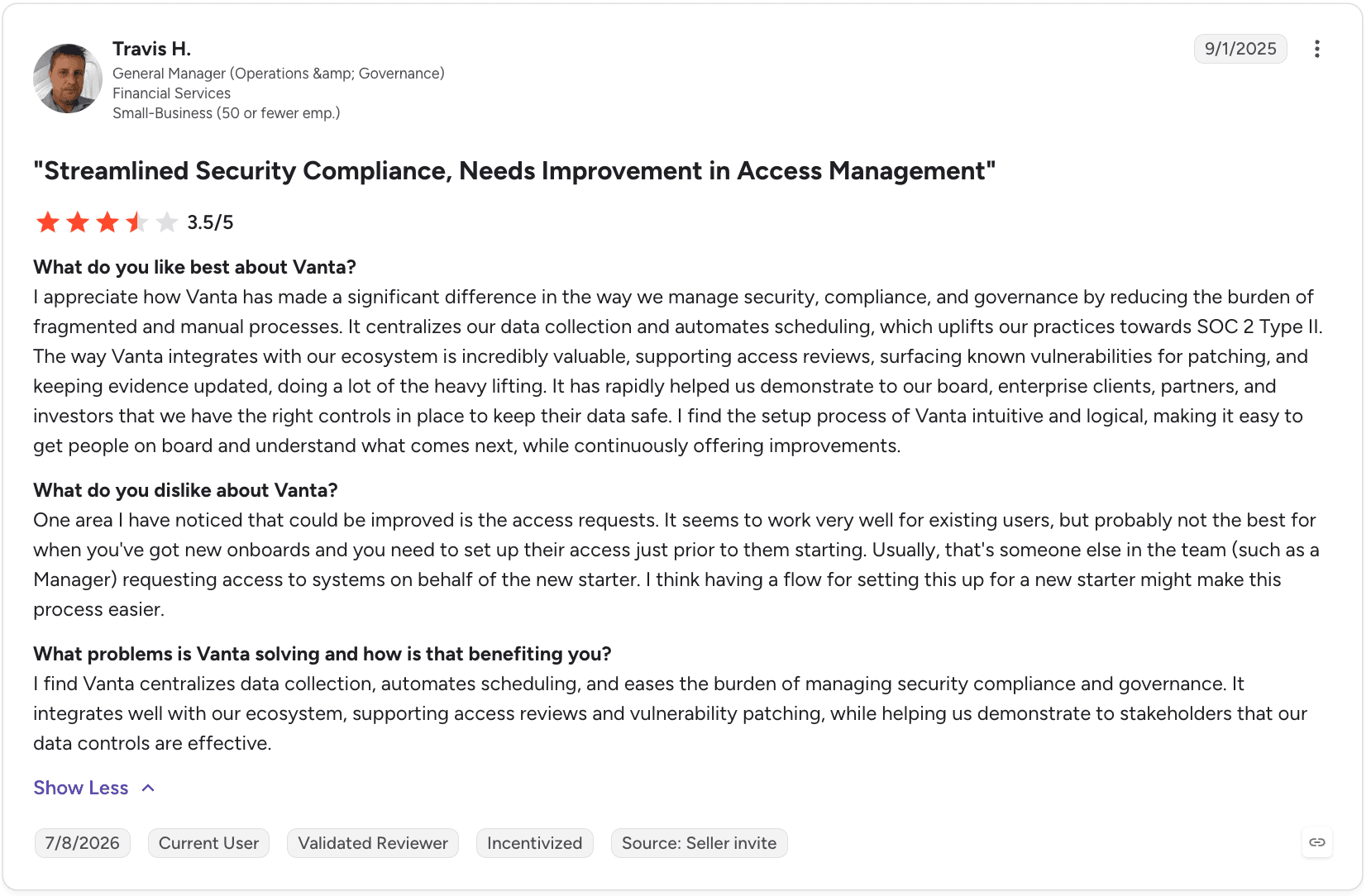
What Real Users Say About Vanta's Security Questionnaire Features on G2?
Who Should Switch from Conveyor to Vanta?
Teams actively using or building on Vanta for SOC 2 or ISO 27001 compliance who want questionnaire automation integrated with live compliance evidence, not as a separate tool with a separate documentation library.
Still comparing tools? Most teams identify the right Conveyor alternative within one live walkthrough on their actual content. → See Thalamus AI Handle a Real Questionnaire
4. SecurityPal - Best Conveyor Alternative for High-Value Deals Requiring Analyst Validation
Switch from Conveyor when: The deals attached to security questionnaires are high-value enough that a wrong AI-generated answer creates downstream contractual or reputational liability, and certified human analyst review behind every answer is a non-negotiable requirement.
G2 rating: NA
Pricing: Custom; per-questionnaire model. 12-hour SLA.
What SecurityPal Does Better Than Conveyor?
Certified human analyst behind every answer - SecurityPal combines AI-generated first drafts with review and verification by certified security analysts, a layer of human accountability that Conveyor's fully automated model does not provide. For enterprise deals where a security questionnaire answer becomes part of a contractual commitment, this matters.
12-hour SLA for completed questionnaire delivery - Meaningful when a security questionnaire is the last blocker before contract signature on a time-sensitive deal.
Free Trust Center tier - SecurityPal provides a public Trust Center without requiring the full platform subscription, a lower-commitment entry point than Conveyor's Trust Center, which is tied to the broader subscription.
Handles all standard questionnaire formats including SIG, CAIQ, HECVAT, custom Excel and Word DDQs, and portal submissions.
Where SecurityPal Falls Short?
Not self-serve - it is a managed service. Teams that want to build internal competency and handle questionnaires at high volume economics will find per-questionnaire pricing expensive at scale.
Not built for RFPs or formal proposals.
Cost scales with volume in a way that flat-rate subscriptions do not.
Who Should Switch from Conveyor to SecurityPal?
Enterprise teams at companies where individual deals are large enough that the cost of certified analyst review per questionnaire is trivially justified by the deal value — and where the risk of an inaccurate automated answer outweighs the economics of pure self-serve.
5. Arphie - Best Conveyor Alternative for Teams That Want Live-Source Answers Without Any Knowledge Library
Switch from Conveyor when: The team wants AI-generated security questionnaire answers from live connected source systems - SharePoint, Confluence, Notion, Seismic - rather than from uploaded documentation that must be kept current separately.
G2 rating: 5 / 5 ↗ G2
Pricing: Custom enterprise; zero data retention policy.
What Arphie Does Better Than Conveyor?
Live source connections replace uploaded documentation - Conveyor generates answers from uploaded policies, SOC 2 reports, and past questionnaire responses. Arphie connects directly to SharePoint, Confluence, Notion, Google Drive, Seismic, and Highspot, retrieving current answers at query time. Answers are only as stale as the source documents, not as stale as the last documentation upload to Conveyor.
Proactive update flagging - When connected source documents change, Arphie flags which questionnaire answers may be affected before they appear in a live review.
Zero data retention policy and SOC 2 Type 2 certification - A security posture that regulated-industry buyers often specifically request in vendor assessments.
Confidence scores and source citations on every answer - Full provenance on every generated response.
Where Arphie Falls Short?
No Trust Center - Conveyor's inbound volume reduction capability is absent.
Source system quality determines answer quality - Disorganized SharePoint or Confluence produces disorganized answers; the maintenance burden shifts rather than disappears.
Custom enterprise pricing with no self-serve evaluation path.
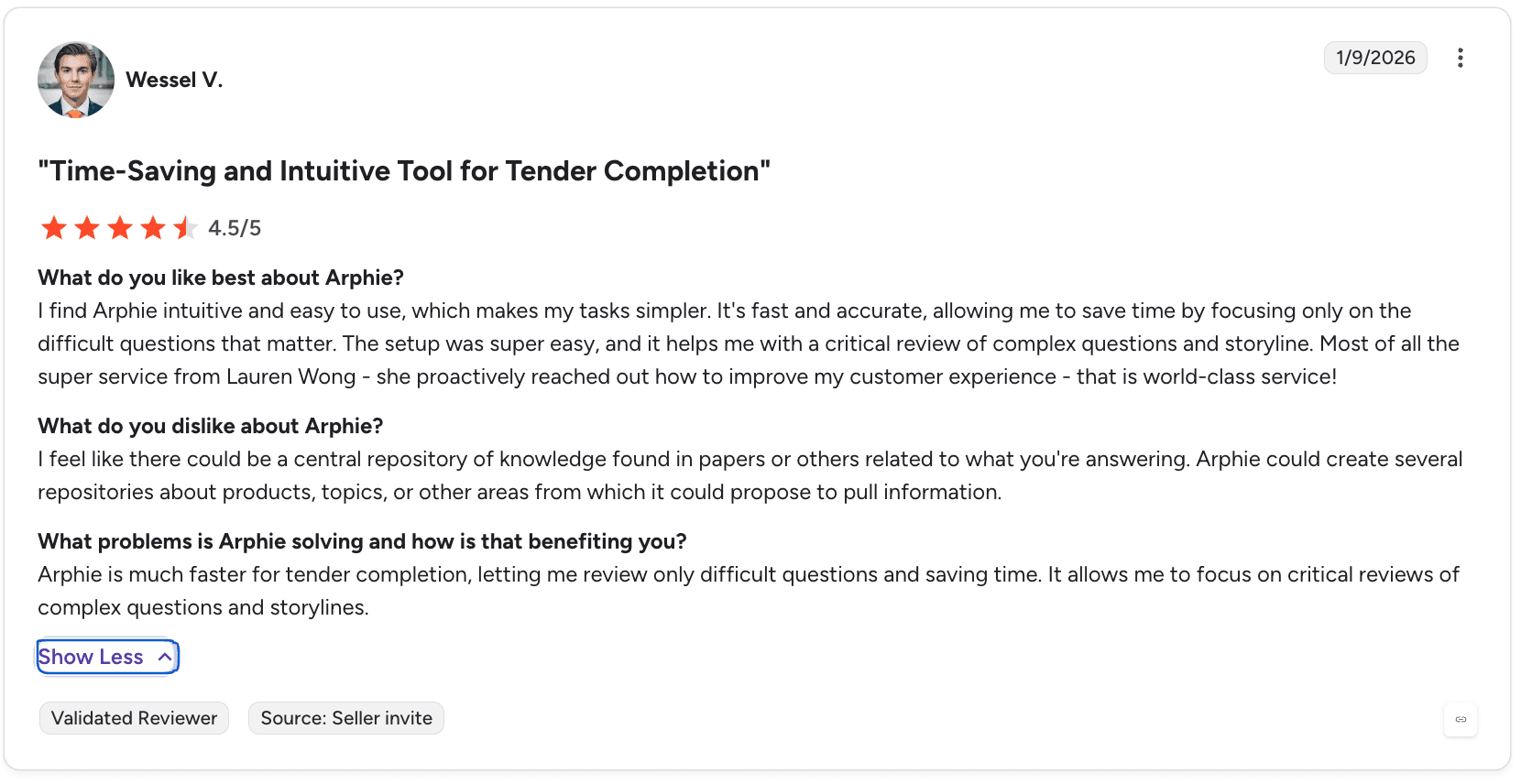
What Real Users Say About Arphie on G2?
Who Should Switch from Conveyor to Arphie?
Security and presales teams whose compliance and security documentation already lives in well-organized live source systems, and who want security questionnaire answers from current source documents without a separately maintained documentation library.
6. Skypher - Best Conveyor Alternative for Complex Portal Formats and Structured Excel/Word Questionnaires
Switch from Conveyor when: The primary security questionnaire formats are complex, Excel files with macros, dropdowns, and conditional logic; long Word documents with nested tables and checkboxes; or enterprise portal submissions through Archer, OneTrust, or ServiceNow rather than Whistic or BitSight.
G2 rating: NA
Pricing: Contact for quote. No public pricing.
What Skypher Does Better Than Conveyor?
Broadest complex format support in the security questionnaire category - Skypher handles Excel with macros, dropdowns, conditional logic, and evidence field attachments, formats that require more than basic text-fill. Long Word documents with nested tables, checkboxes, and formatted sections are also natively supported.
Enterprise portal export support beyond Whistic and BitSight - Skypher exports questionnaires directly from Archer, OneTrust, and ServiceNow portals into its platform, enabling the full collaboration and AI workflow rather than browser-extension-only autofill. Conveyor's portal support is primarily browser-extension-based for Whistic and BitSight.
Extractive AI - no hallucinations by design - Skypher uses extractive rather than generative AI for answer retrieval - directly surfacing evidence from connected documents rather than generating new text. The tradeoff is less fluent narrative generation; the benefit is verifiable answer grounding without hallucination risk.
Activates quickly without requiring a large pre-built documentation library.
Where Skypher Falls Short as a Conveyor Alternative?
No Trust Center - Conveyor's inbound volume reduction capability is absent.
Less established review base than Conveyor's 150+ G2 reviews.
Extractive AI produces less fluent prose than generative alternatives; answers may require more editing for narrative questionnaire sections.
Who Should Switch from Conveyor to Skypher?
Security and compliance teams whose inbound questionnaires are primarily complex structured formats - enterprise portal submissions through Archer, OneTrust, or ServiceNow; Excel files with conditional logic; or long Word documents with nested structured tables - where Conveyor's browser-extension portal support is insufficient for the format complexity.
7. Responsive (RFPIO) - Best Conveyor Alternative for Enterprise Scale and CRM Integration
Switch from Conveyor when: The team manages security questionnaires alongside a high volume of structured RFPs and vendor assessments, and needs deep Salesforce or HubSpot integration to track questionnaire completion status within the deal record.
G2 rating: 4.5 / 5 ↗ G2
Pricing: Foundations plan approximately $20,000+/year; seat-based.
What Responsive Does Better Than Conveyor?
One of the deepest CRM integration in the category - Salesforce and HubSpot native connections mean security questionnaire completion status tracks directly within the deal record, so the sales team can see when a questionnaire is in progress without leaving the CRM.
Handles security questionnaires, RFPs, DDQs, and RFIs in one platform - Removes the tool-per-format problem for teams whose inbound volume spans multiple assessment types.
Where Responsive Falls Short?
No Trust Center - Conveyor's inbound volume reduction is absent.
Q&A library maintenance model - the same overhead Conveyor's document-retrieval model avoids.
Seat-based pricing at ~$20K+/year, meaningfully more expensive than Conveyor's credit model at moderate volume.
For a full evaluation, see our 10 Best Responsive Alternatives in 2026.
8. Loopio - Best Conveyor Alternative for Governed Content Libraries With Outstanding Support
Switch from Conveyor when: The team needs a well-supported, governed content library platform that covers security questionnaires and RFPs in one environment, and outstanding customer support is a specific priority given the deal-blocking nature of security reviews.
G2 rating: 4.7 / 5 ↗ G2
Pricing: Enterprise; contact for quote.
What Loopio Does Better Than Conveyor?
9.7/10 G2 customer support score - the highest in the RFP and questionnaire software category. For security teams where a questionnaire deadline creates an urgent support need, this matters significantly.
Governed content library with automated stale content alerts - Loopio's scheduled review cycles and stale content flagging are more structured than Conveyor's document-based approach for teams that want a formal answer governance process.
Handles RFPs, RFIs, DDQs, and security questionnaires in one library.
Where Loopio Falls Short?
No Trust Center - Conveyor's inbound volume reduction is absent.
Q&A library maintenance overhead - someone must curate, tag, and update the library to maintain AI output quality.
Limited portal questionnaire support compared to Conveyor's Whistic and BitSight focus.
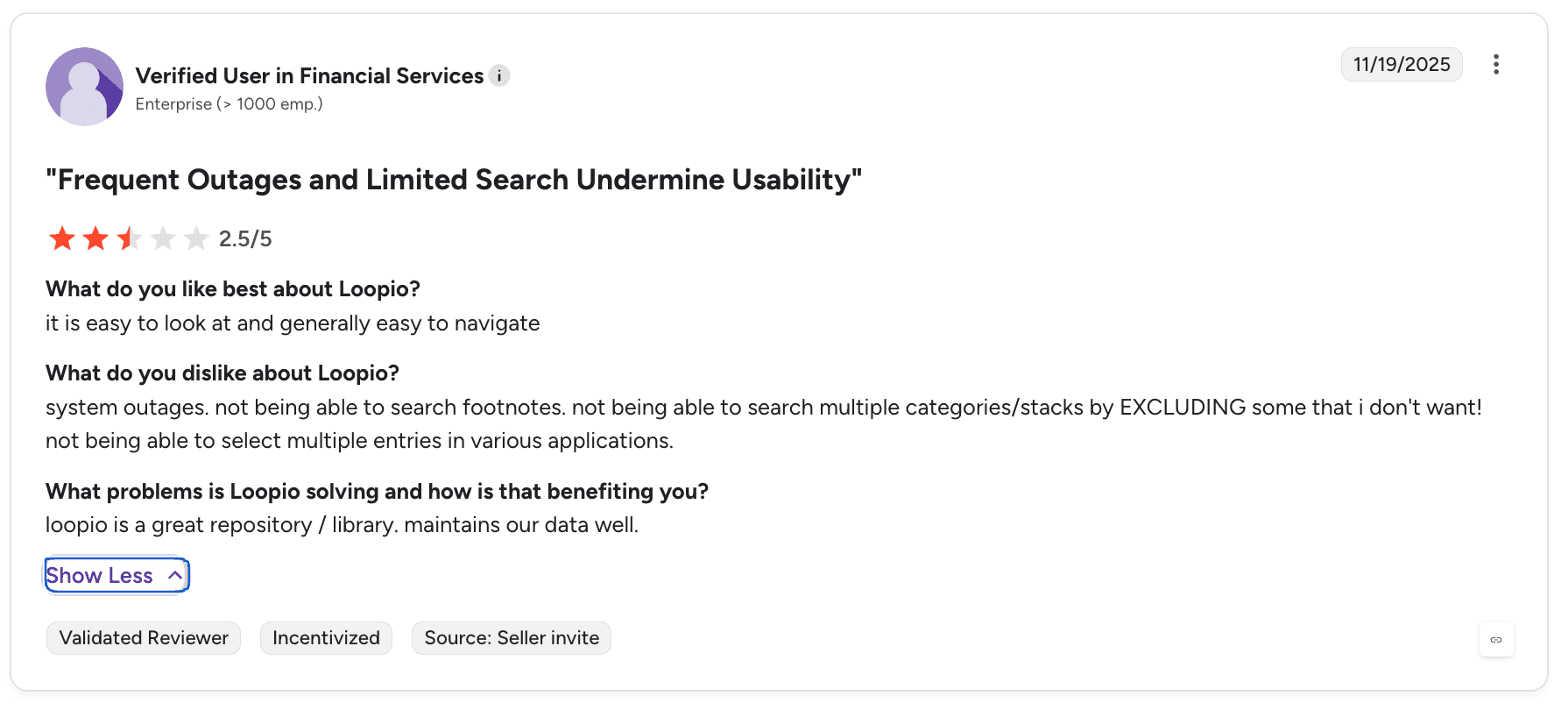
What Real Users Say About Loopio on G2?
For a complete evaluation, see our 10 Best Loopio Alternatives in 2026. For a direct head-to-head on architecture and pricing, see Thalamus AI vs Loopio.
9. SafeBase (by Drata) - Best Conveyor Trust Center Alternative for Compliance Platform Teams
Switch from Conveyor when: The team is already on Drata for SOC 2 or ISO 27001 and wants a Trust Center that is integrated with live compliance monitoring, rather than populated from separately uploaded documentation.
G2 rating: NA
Pricing: Custom; available as Drata bundle or standalone.
What SafeBase Does Better Than Conveyor's Trust Center?
Trust Center populated from live Drata compliance evidence - For teams on Drata, SafeBase's Trust Center automatically reflects the current compliance posture as Drata's monitoring updates, without requiring manual documentation uploads to keep the Trust Center current.
Granular access control - Public information visible to all prospects; sensitive documentation visible only to NDA-signed evaluators, a more configurable access model than Conveyor's Trust Center.
AI-assisted questionnaire responses from compliance evidence for assessments that do come in formally.
Where SafeBase Falls Short?
Trust Center ROI requires prospect adoption - The volume reduction benefit takes time and active promotion before inbound questionnaire volume meaningfully drops.
Not for teams not on Drata - The compliance integration value depends on using Drata as the compliance platform.
Not built for RFPs or formal proposals beyond security questionnaire scope.
Who Should Switch from Conveyor to SafeBase?
Teams already on the Drata compliance platform who want their Trust Center and questionnaire answers integrated with live compliance evidence, rather than maintaining a separate documentation library in Conveyor alongside Drata's compliance monitoring.
If your answers point toward a platform covering security questionnaires, RFPs, and DDQs in one place, let's talk. → Get a Personalized Recommendation.
10. 1Up - Best Conveyor Alternative for Small Teams at Zero Cost
Switch from Conveyor when: The team is small (under 10 people), Conveyor's credit model is hard to justify at current questionnaire volume, and Slack-native answer delivery covers the primary workflow need.
G2 rating: 4.9 / 5 ↗ G2
Pricing: Free plan; Starter $300/mo; Plus $900/mo.
What 1Up Does Better Than Conveyor?
Genuinely free - No credit card, no credit model, no procurement process. For small teams receiving their first wave of security questionnaires, this is the most accessible entry point of any purpose-built tool in this evaluation.
Slack and Teams native - Security questions answered without switching platforms.
Live connectors, no documentation uploads required - 1Up connects to your website, Google Drive, Confluence, and past questionnaire responses in real time.
Where 1Up Falls Short?
No Trust Center - Conveyor's inbound volume reduction is absent.
Not designed for complex, multi-stakeholder security review workflows - No approval chains, audit trails, or portal support for enterprise-grade security assessments.
Scales poorly as questionnaire complexity or volume grows.
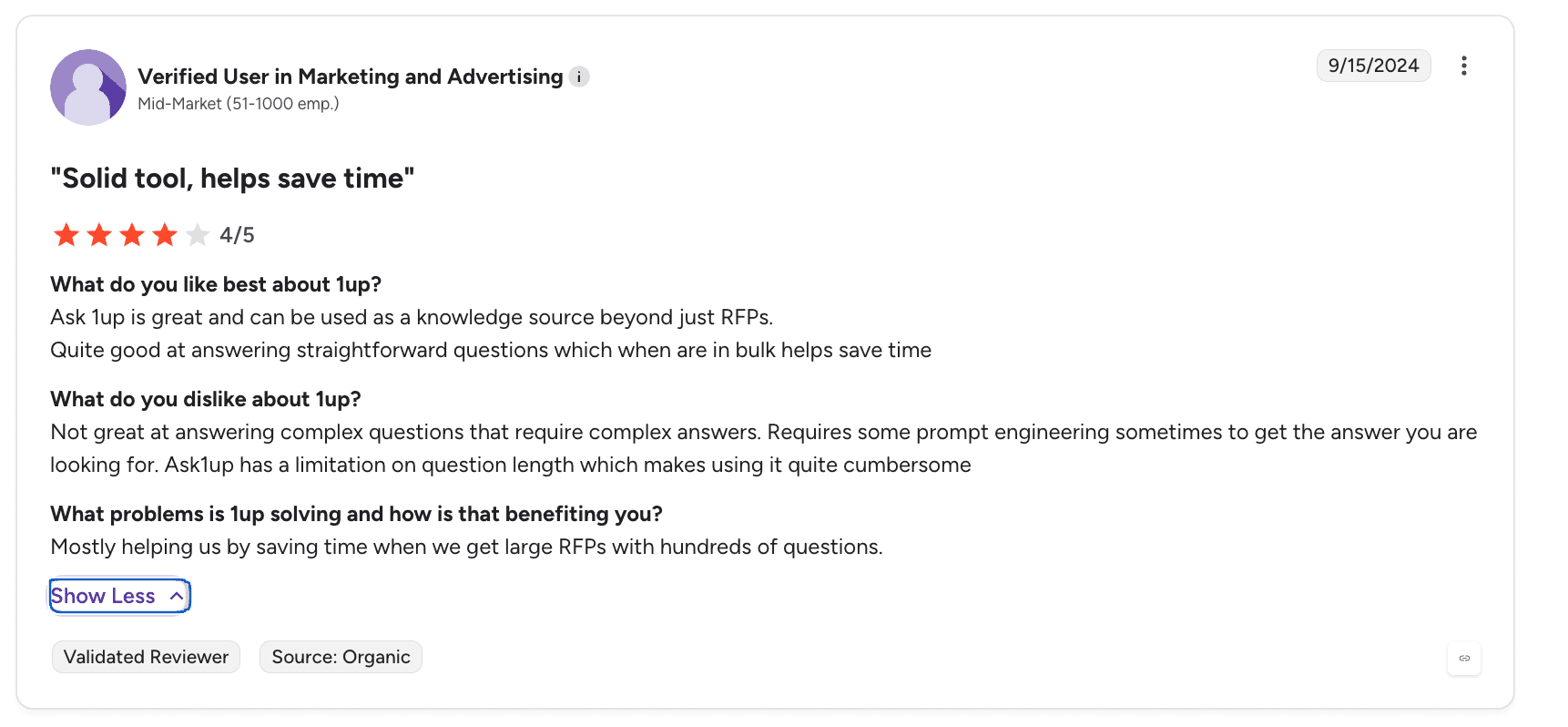
What Real Users Say About 1Up on G2?
Who Should Switch from Conveyor to 1Up?
Small B2B SaaS teams receiving their first wave of vendor security questionnaires who want to get started immediately at zero cost, and whose questionnaire volume and complexity have not yet grown to require portal support, approval chains, or a Trust Center.
How to Choose the Right Conveyor Alternative?
Match your switch reason to your alternative before shortlisting any platform.
If bid lifecycle depth is the reason - your team needs more than customer trust and response automation: Thalamus AI for full bid lifecycle infrastructure across RFPs, DDQs, security questionnaires, compliance matrices, SME routing, addenda, portal responses, and post-bid learning; Responsive or Loopio for broader library-based response management; HeyIris or Arphie for source-cited questionnaire and RFP support.
If Trust Center is the reason - specifically the inbound volume reduction benefit: Vanta (compliance-evidence-grounded, recommended if already on Vanta), SafeBase/Drata (recommended if already on Drata), or SecurityPal (free Trust Center tier with managed response option).
If credit-based pricing is the reason - invoice unpredictability at high volume: Thalamus AI (unlimited subscription), HeyIris (per-user, unlimited collaborators), 1Up (free plan), or Loopio/Responsive (enterprise subscription, though higher base cost).
If human validation is the reason - AI-only automation is insufficient for high-stakes deals: SecurityPal is the only platform in this evaluation purpose-built for certified analyst review behind every answer.
If complex portal or format support is the reason - Archer, OneTrust, ServiceNow portals, or Excel with macros and conditional logic: Skypher is the strongest specialist for this specific format requirement.
For a full comparison of how these platforms are priced, see our RFP Software Pricing Guide for 2026. For a broader evaluation of security questionnaire automation tools including those not covered here, see our Best Security Questionnaire Automation Software in 2026 and DDQ Automation Software guide.
Conveyor Alternatives FAQ
How does Conveyor’s RFP response capability compare with Thalamus AI?
Conveyor offers RFP response capability and publicly positions AI RFP response software as part of its customer trust platform. It can help teams upload or submit RFPs, generate first drafts, and use customer trust knowledge for responses. The difference is scope depth. Conveyor is strong for customer trust, security questionnaires, Trust Centers, and RFP response support. Thalamus AI is built for broader bid lifecycle management across RFPs, DDQs, security questionnaires, compliance matrices, SME routing, addenda, portal responses, source-linked drafting, and post-bid learning.
How does Conveyor's credit-based pricing compare to unlimited-user alternatives?
Conveyor's credit-based model means cost scales with questionnaire volume rather than with team size, which is more predictable than seat-based pricing for teams with a stable questionnaire volume. It becomes harder to manage for teams with variable volume: a wave of simultaneous enterprise deals generates a larger credit spend than a quiet quarter, making quarterly budget forecasting difficult. The directly comparable unlimited-volume alternatives are Thalamus AI (unlimited projects and RFPs under one subscription), Arphie (custom enterprise but not consumption-based), and SecurityPal (per-questionnaire pricing, which is transparent but also variable). 1Up and AutoRFP.ai offer flat monthly tiers that do not scale with volume.
What is the difference between Conveyor's Trust Center and alternatives like SafeBase or Vanta?
All three provide a public-facing Trust Center where buyers can self-serve security documentation and pre-answered questionnaire content before submitting a formal assessment request. The meaningful difference is what powers the Trust Center content. Conveyor's Trust Center is populated from documentation uploaded to the platform - which requires manual updates when certifications renew or policies change. SafeBase's Trust Center is integrated with Drata's live compliance monitoring - so the Trust Center automatically reflects the current compliance posture as controls are updated in Drata. Vanta's Trust Center similarly draws from live compliance evidence. For teams on Drata or Vanta, the second model keeps the Trust Center current with less maintenance; for teams not on those platforms, Conveyor's documentation-based model is equivalent in practice.
Is Conveyor a TPRM (third-party risk management) platform?
No. Conveyor is a security questionnaire response automation tool; it helps B2B vendors answer security reviews sent to them by their customers. TPRM platforms (VISO TRUST, Prevalent, Panorays, LogicGate) work in the opposite direction: they help organisations send security assessments to their vendors and manage the resulting risk data. The confusion arises because both categories involve security questionnaires, but the roles are reversed. If you are a vendor responding to customer security reviews, Conveyor is in the right category. If you are an enterprise managing the security risk of your own vendor base, you need a TPRM platform, not Conveyor or any of its alternatives listed here.
Thalamus AI: Conveyor Alternative for RFPs, DDQs, and Security Questionnaires in 2026
Conveyor earned its 4.6/5 G2 rating and 150+ reviews for a real reason: it is a well-designed security questionnaire automation tool that solves a specific, commercially urgent problem, inbound security review volume, faster and more reliably than most alternatives at the point where that problem first becomes serious.
Teams that switch are typically not dissatisfied with Conveyor’s core capability. They have usually outgrown it in one of four directions: bid lifecycle depth, volume pricing, human validation requirements, or compliance program integration. Matching the alternative to the specific switch reason is the only evaluation approach that avoids replacing one mismatched platform with another.
If the direction is bid lifecycle depth, your team now needs RFPs, DDQs, security questionnaires, compliance matrices, SME routing, addenda, portal responses, and proposal workflows in one operating layer.
Your next enterprise security review and your next RFP should not require disconnected workflows. → Book Your Demo.